.jpg)


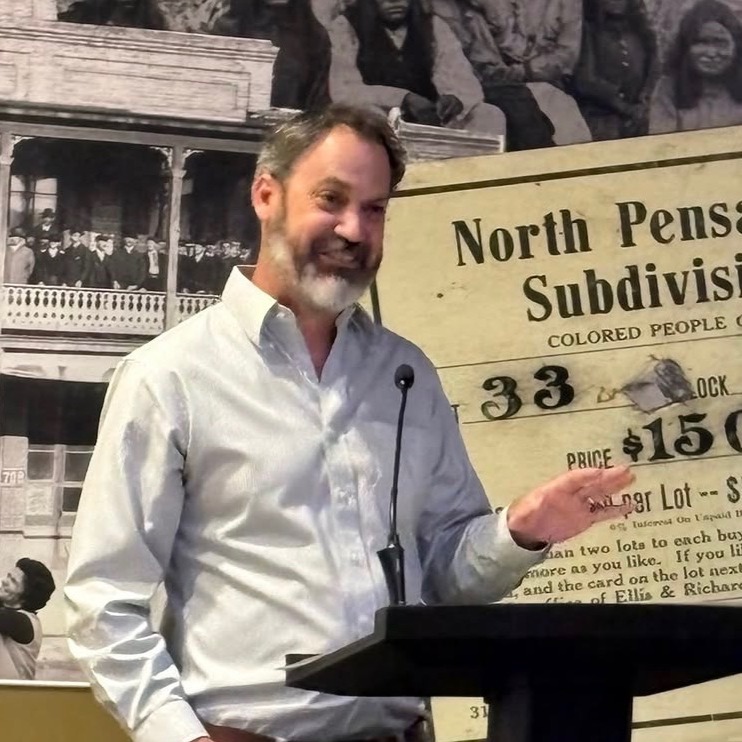
Good evening. Thank you for having me, Dr. Kevin Scott, English department faculty. Graduates, welcome.
When Professor Satterwhite asked me to be your keynote speaker, I told him I was honored but completely unqualified. He took that as a yes. So here I am.
And honestly, that might be the most useful thing I can offer you tonight:
You may always feel unqualified. And maybe that’s the point. Because I remember sitting where you’re sitting, probably half-paying attention, wondering if I belonged in those classrooms at all. Wondering if everyone else understood something I didn’t.
There’s that saying, if you’re the smartest person in the room, you’re in the wrong room. You want to surround yourself with those smarter than you. And although you might feel like you are out of place, out of tune, you show up and stay in the room anyway. And maybe you’ll never feel like you belong there. And that’s okay.
And I’d take that a step further. If you ever get to the point where you think you’re the smartest person in the room, where you think you know what you’re doing, that you’ve figured it out, that’s when you stop learning.
That feeling you’ve had, anxiety, uncertainty, not knowing what’s going on, that’s not a weakness. It’s the same feeling as excitement. It’s the same feeling you get before getting on a roller coaster or walking into a rock show to see your favorite band. It’s the feeling of the unknown.
And once you recognize that, you can use it. You can harness it and move forward.
I was talking to a friend of mine last night who runs a metal fabrication shop. 18 years ago, he quit his job with a two-year-old at home and started his own business. Scared to death. Didn’t know how he was going to pay the bills.
And then he started showing up, taking meetings, bidding on projects he probably had no business bidding on. And he got them. His shop did the handrails at Tulane Medical Center in New Orleans. They did the handrails on the entire stadium at Ole Miss. They did the handrails of the Three Mile Bridge.
He felt unqualified for such big projects. But he got them done. He did it anyway. He figured it out as he went. And he told me something his mentor said to him early on. His mentor asked him, “Do you know what a rut is?”
He gave the standard definition, “a deep, narrow groove in the ground created by wheels, or a monotonous motion.” A monotonous motion. That’s the key phrase. And his mentor said, “No. A rut is a grave with both ends kicked out.” That’s what happens when you stop growing. When you stop learning. When you get comfortable, thinking you’ve figured it out.
So you want that uncertainty. You want that feeling of not knowing what comes next, of not being sure how you’re going to pull something off. Because that’s where growth happens.
When you graduated from high school, you had a decision to make: military, workforce, or college. You chose college. Now you’re here. And this is just the next version of that same moment.
There’s going to be another decision. Another unknown. Another thing you’re not sure you’re ready for. Don’t avoid it. Because you don’t want to get stuck in that rut. And you already know how to do that.
Because over the last four or five, maybe for some of you, six years, you’ve done things you weren’t ready for. You’ve written papers in the last hour before they were due. You’ve given presentations you weren’t fully prepared for. You’ve pushed through moments where the easier option was to quit.
But you didn’t. Because if you had, you wouldn’t be here tonight.
So whatever comes next—jobs, careers, uncertainty—you already have proof that you can move forward before you feel ready. That matters more than you think.
Now, some of you, maybe many of you, have had to answer the question: “What are you going to do with an English degree?” You’ve seen the look people give you when you answer it. I had a favorite writer, Larry Brown. He was a Marine, then a firefighter. And one day, he decided he wanted to be a writer.
But he was afraid to tell anyone. Because how do you say something that sounds that impractical? That unrealistic? How do you say: I’m going to be a writer?
Larry Brown wrote in secrecy because he thought it sounded foolish to tell those firefighters that he was going to be a writer. This was back when you had to mail off manuscripts. You had to print them out, send query letters through the mail, and then wait. And wait.
He would walk out to the mailbox every day, checking for a response. There was no Submittable, no firing off an email. Just silence, and eventually rejection. Day after day, rejection after rejection.
And he burned five manuscripts. Full, completed novels. Think about that. The dedication it takes to finish one novel, and he burned it. Then to write another, and burn it too. And another. And so on.
But he did it anyway.
And eventually, he succeeded. However hard it was, however much it cost him, he did what he set out to do because he didn’t stop. He said if he wanted it badly enough, eventually it would come. And it did.
And I think that’s true with anything.
There’s a poem by Charles Bukowski called “Roll the Dice.” And it’s not romantic. It’s not inspirational in the way you expect. It’s brutal honesty. It talks about sleeping on park benches. Losing relationships. Not eating for days. Isolation.
And the message isn’t “this will be fun.” It’s: if you’re going to do it, go all the way. Even when you don’t want to. Even when it’s not working. Even when it feels foolish. You do it anyway.
And that’s the thread here.
Everyone in this room, your professors, your peers, your parents, has done something that doesn’t come with a clear, guaranteed path. And now you have chosen something that asks more of you than it promises in return.
And yes, let’s be honest, it’s not always easy to make a living in the arts or humanities field.
Some of you will stay in it. Some of you won’t. Some of you will end up in places you never expected, maybe even somewhere down the road like Navy Federal, and that’s fine. That’s not failure. Finding a career outside your degree is not a failure. Your degree is the foundation for whatever you build after.
Because what you’ve gained here isn’t narrow. It’s not fragile. It doesn’t disappear just because your job title changes. In fact, and I’m biased, I think this is one of the most important degrees you can get.
Maybe the most important. Because you can always learn a technical skill. You can always be trained to do something specific. But what you’ve done here is different. You’ve spent years immersed in literature, reading the greatest thinkers across centuries. You’ve learned how to pay attention. How to sit with complexity. How to interpret, to question, to argue.
You’ve learned how to enter a conversation that started long before you. And won’t end with you. And not just as a passive observer, but as a participant. As someone with a voice. That prepares you for more than a job. It prepares you for life.
It prepares you for moments like this, when something unexpected happens, when you feel unqualified, when you’re not sure what you’re doing, and you step up anyway. Because you’ve done it before.
And here’s the other thing: In a world that is increasingly loud, fast, and distracted, where everything is designed to be consumed quickly and forgotten just as fast, you’ve chosen something different.
You’ve chosen to read. To think. To slow down long enough to understand something deeply.
That alone sets you apart. In a world of scrolling, you’ve practiced attention.
In a world of noise, you’ve practiced meaning. That’s not outdated. That’s rare. And it’s needed.
So if I can leave you with anything, it’s this: Don’t wait to feel ready. Don’t wait until you feel qualified. You may never feel that way. Write anyway. Speak anyway. Apply for the job anyway. Tell people what you want to do, even when it sounds unrealistic.
Do it anyway.
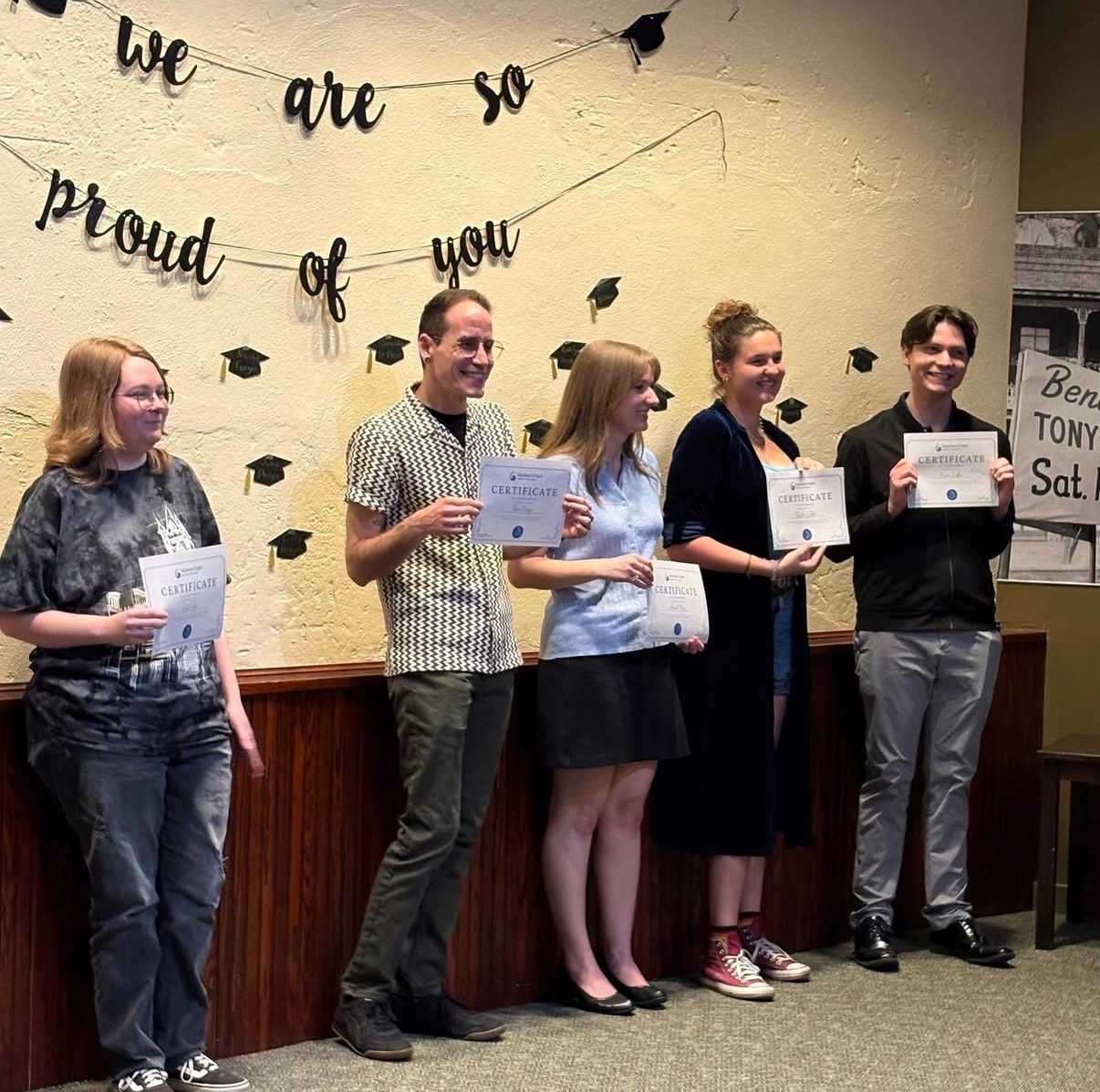
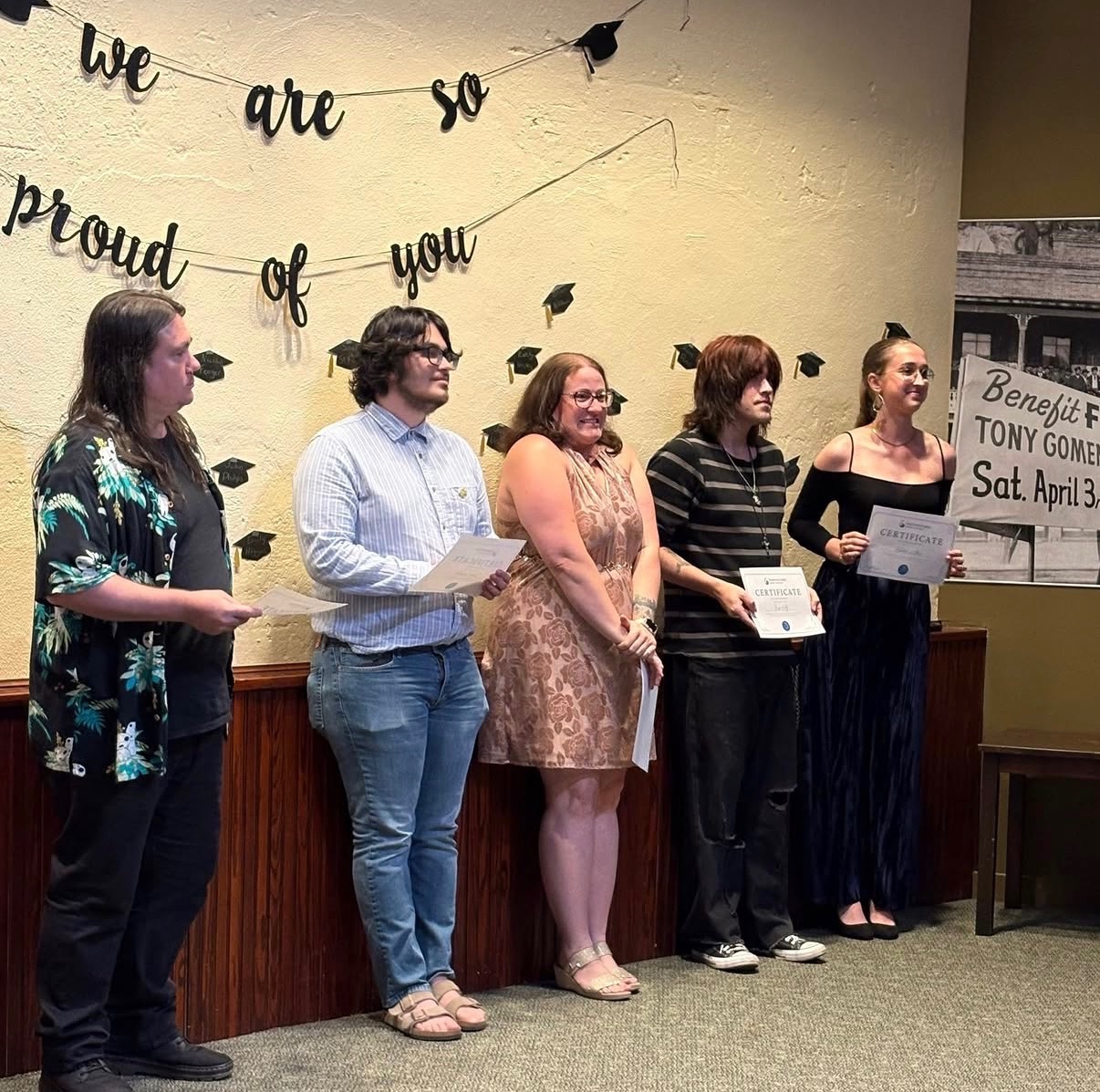
Because the truth is, no one really feels ready for the things that matter most. They just go forward despite it. Just like you did to get here. So congratulations. Not just for graduating, but for staying in the room when it would’ve been easier to leave.
And whatever comes next,
Go do it anyway.
More from
Events That Inspire
category


Top Five Things to Do in November

Top Five Things to Do in October
Top Five Things to Do in September
Top Five Things to Do in August