.jpg)


The Mobile-Tensaw River Delta is a 260,000-acre maze of rivers, creeks, marshes, and bayous. The Mobile, the Tensaw, the Apalachee, and the Spanish rivers all converge to create the second largest river delta, and one of the most biologically diverse regions in the US.
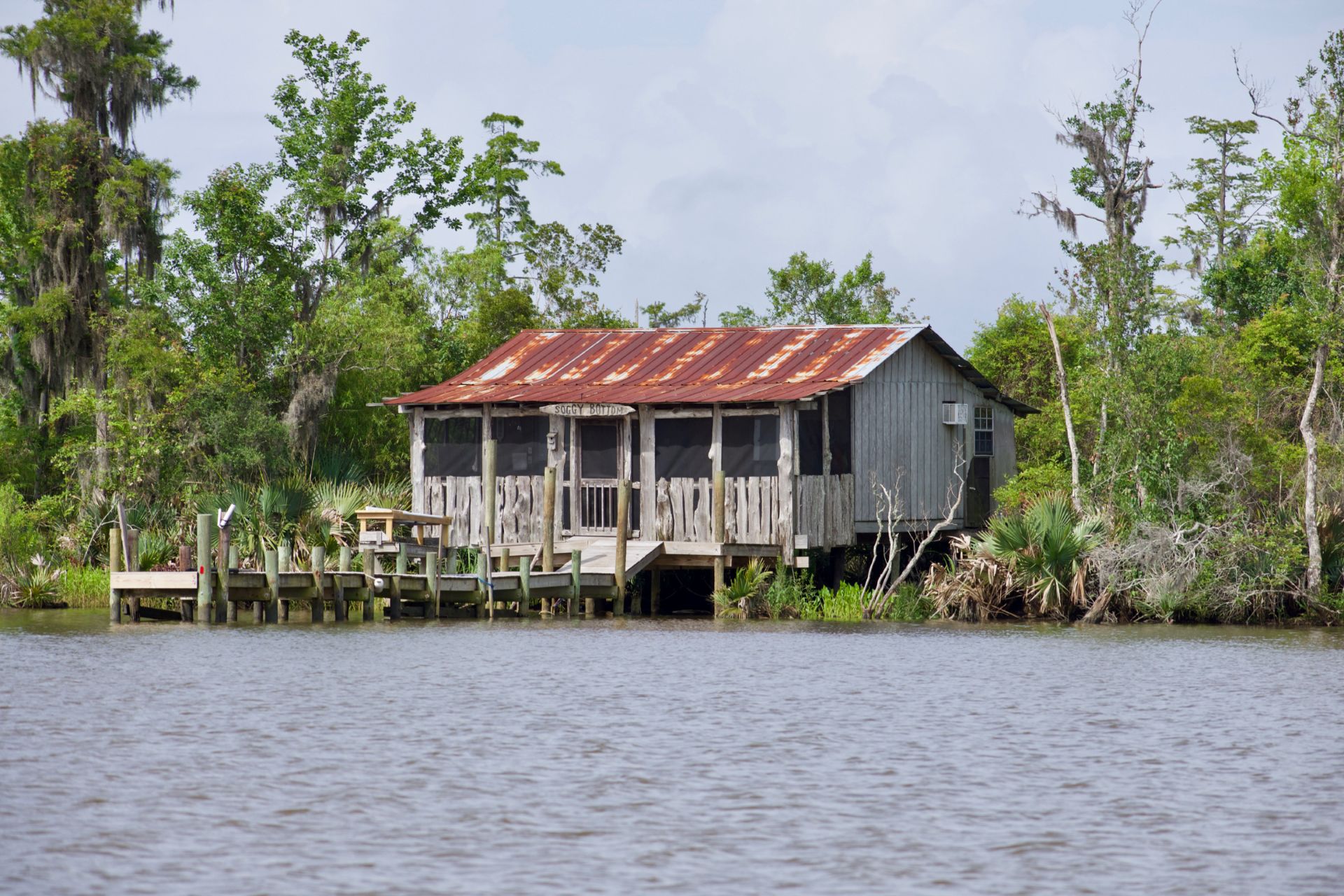
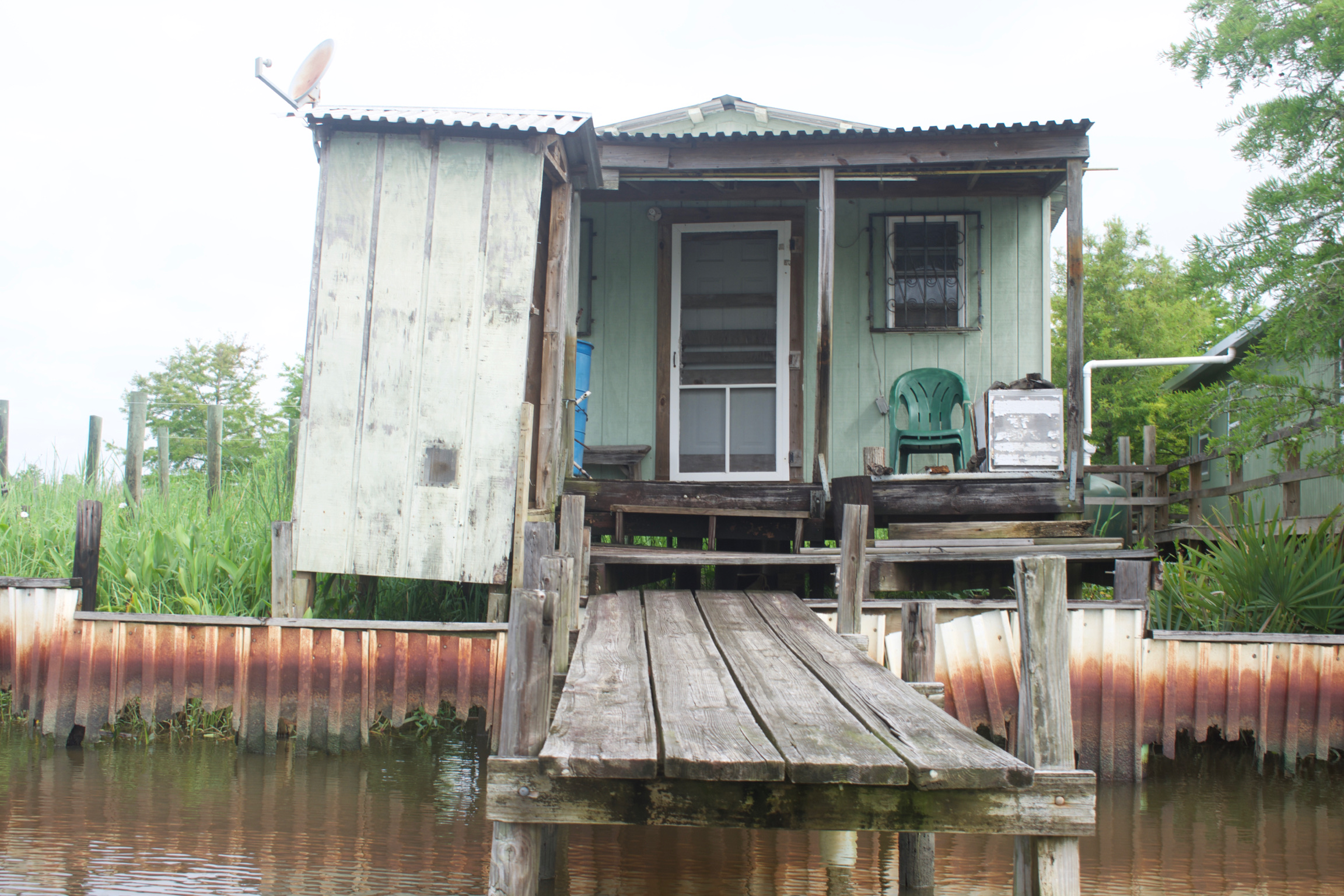
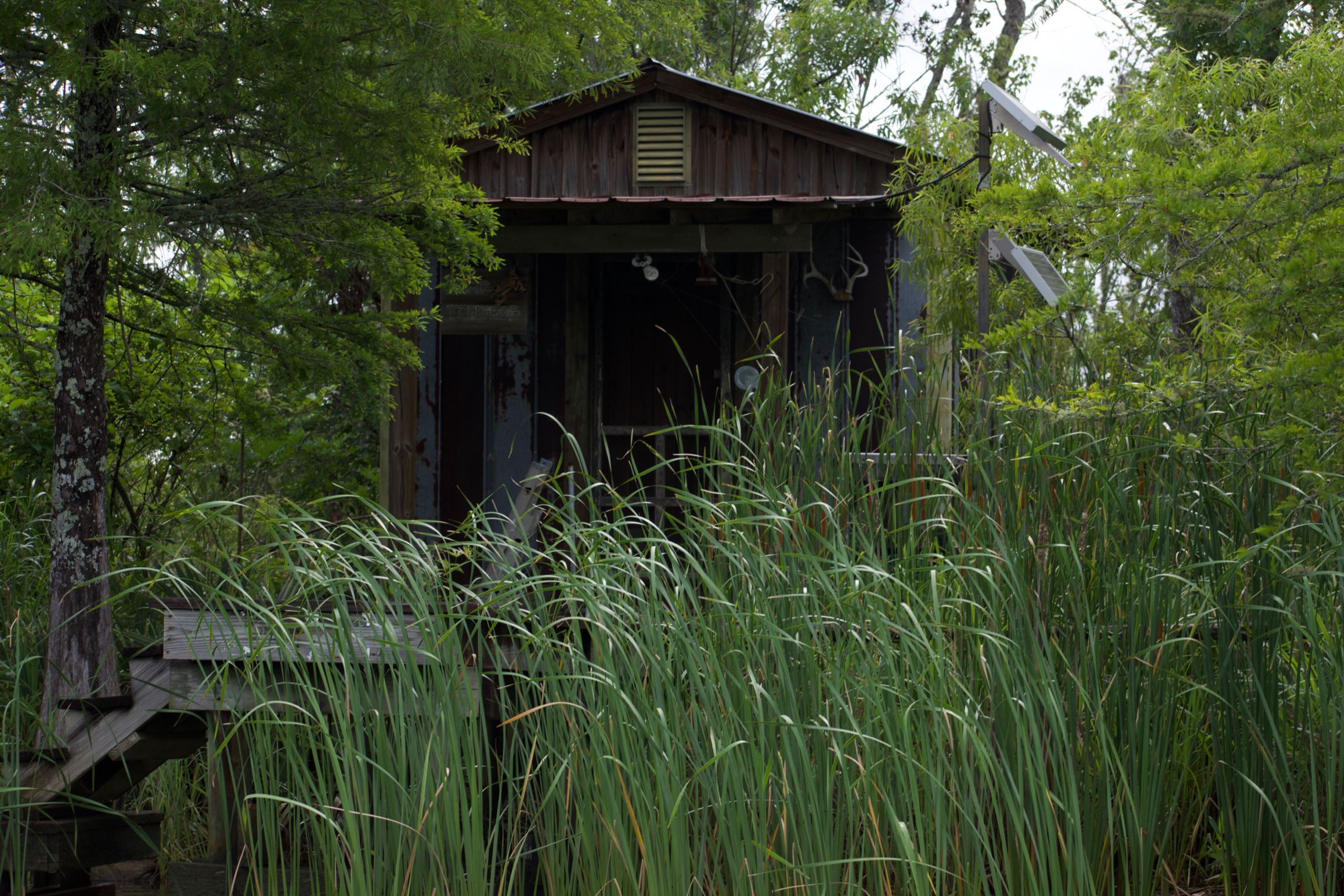
The Delta’s bountiful fish and game species make it a sportsman’s paradise (to borrow the phrase from Louisiana). Around the 1940’s, sportsmen began to build hunting and fishing camps in the Delta. Only accessible by boat, camps were built with tools and materials that could only be transported by water. Most were, and are, one or two-room shacks built on pilings above the grassy marshlands. Living is not easy in the Delta, but for some, a camp in the Delta is all one might need for the good life.
Kendall Dexter is from Mobile, but says he grew up in the Delta. When he was 15, he had a 16-year-old friend with a boat. During the summer, they would meet every morning and take the boat to the causeway to launch.
“We’d stop at Pollman’s, get two sandwiches and some Coca-Colas, and we’d explore that Delta. Day in and day out, eventually we knew every bit of it.” For the opening of duck season, “Our parents would let us skip school. We’d leave the causeway Wednesday afternoon at 3:00 and come back Sunday afternoon. 15 years old, no cell phone, nothing. But we came back every time.”
Liz’s Haven
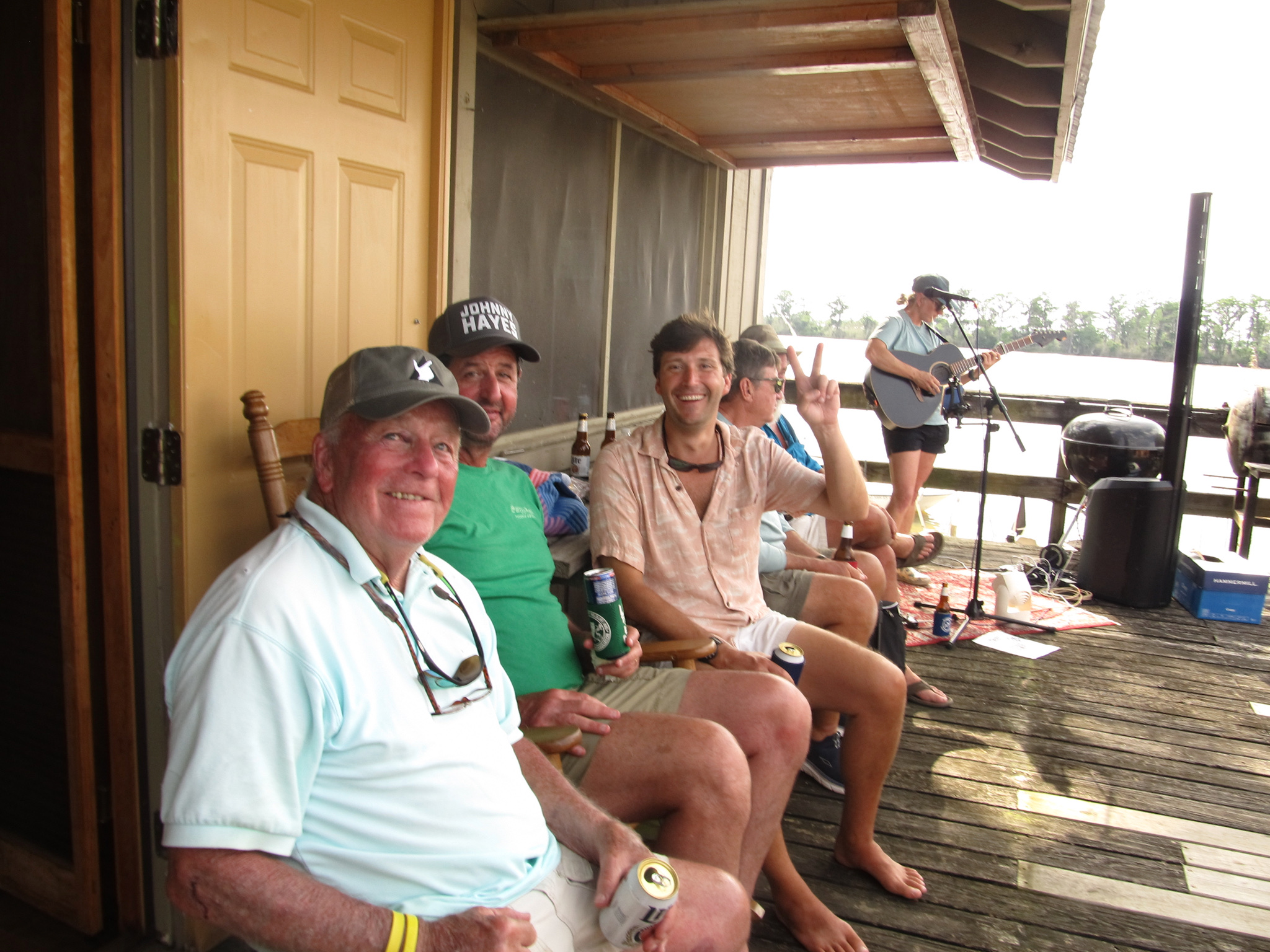
After college, Kendall began to frequent Liz’s Haven on the causeway. Liz’s Haven was a bar with a boat launch, or maybe a boat launch with a bar. Either way, it served as a watering hole, meeting place, and cultural center for many that had camps in the lower Delta.
At the time, “it was all about duck hunting,” Kendall said. Camp members would leave the causeway on a Friday afternoon, settle into their camps, and go scout for ducks. After dark, they would all go to Liz’s. “You’d bust up into Liz’s and the place would be packed with 65 guys all dressed in camouflage, jukebox cranked up, energy level is way up here, plenty of beer. It just used to be so great.”
Everyone would go back to their respective camps, hunt the next morning, then all meet back at Liz’s around lunch to repeat the process. Kendall says he made real friendships at Liz’s and got to know people he otherwise would not have. He said, “It didn’t matter what you did, where you lived, or anything like that; you were judged based on your character in the Delta.” Through Liz’s, Kendall came to know the community of people that participated in camps in the Delta, and the etiquette associated with them.
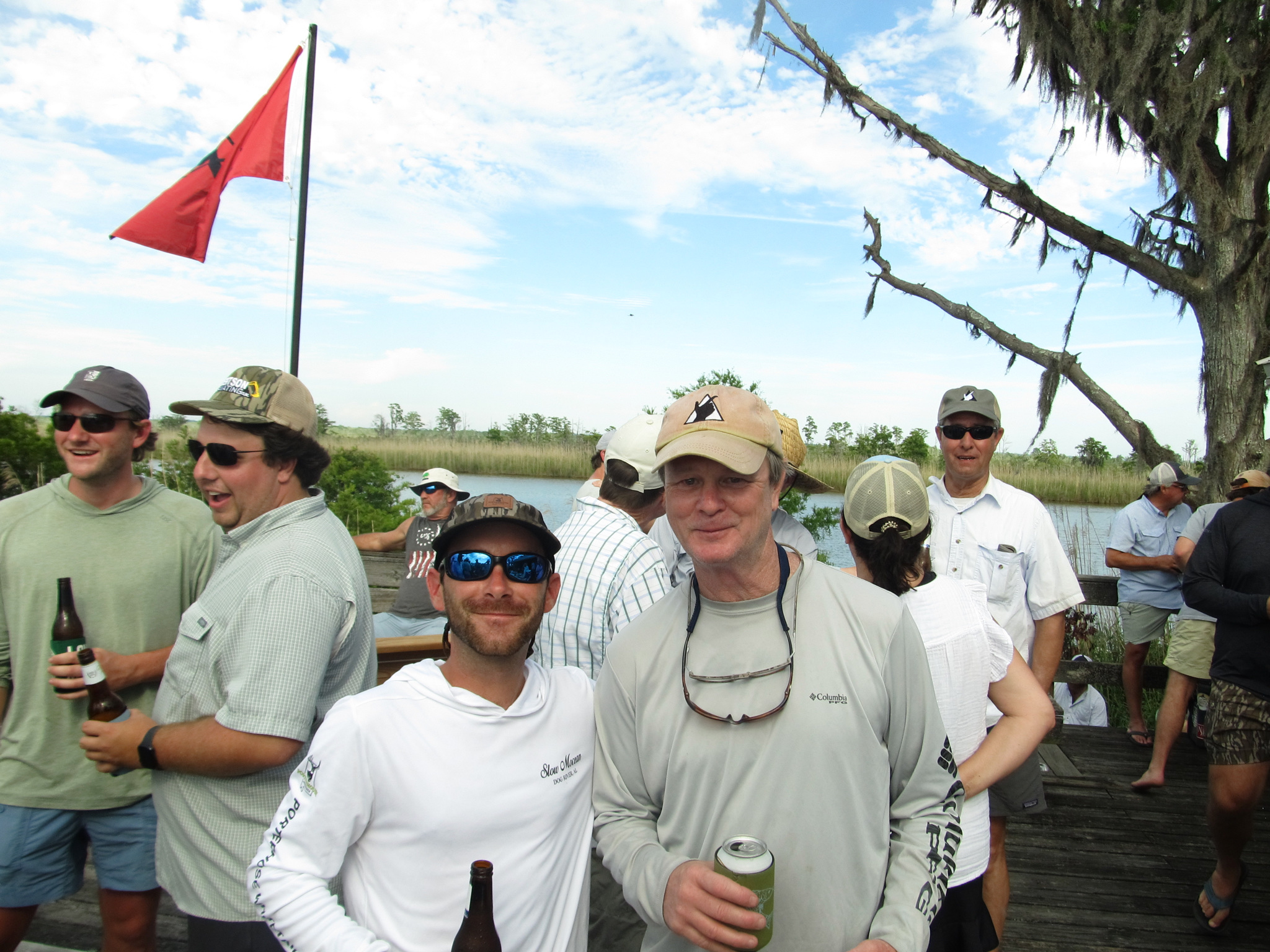
Everyone had a flag at their camp. If you were there, your flag was flying. If your flag was flying, you were open to visitors. Kendall discovered that being open to visitors in the Delta was not the same as being open to a quick conversation with a passing neighbor in town. As he learned whose camps were whose and got to know the members at Liz’s, he would stop by if their flags were flying.
“You didn’t just get up there and say ‘Hey, I’m just passing through’; you sat your ass down, drank a few beers, ate their food, saw their camps, and you talked to them.” The flip side was that when someone stopped by your camp, the same level of hospitality was expected. Kendall, a naturally sociable person, says, “I really enjoyed the community of camps up there.”
Delta Camps
“Anybody can buy a camp up there, but to keep it running is a whole other thing.” The environment in the Delta is not hospitable to anything man-made. Building materials deteriorate at an accelerated rate due to the harsh conditions. Camps will literally sink into the mud without continual intervention. “If you don’t get up there and work with them, they fall apart,” he says. Left alone, a camp will be swallowed by the swamp. That is not to mention the inevitable hurricane that is bound to destroy and/or flood the camp. “The people that really love it, they build one and a storm gets it. The second one, the third one, now you're in your fifties, it’s tough; after that, people give up on it.”
Keeping a committed membership in the camps that do survive is a challenge. “It’s hard, you know, people come in, they join them and, after a while, they dissipate.” Even the eight members that Kendall “grew up with” in his camp do not participate much anymore. They are older and, “they have other things,” he says, visibly perplexed.
He is not seeing the next generation step in to fill the void: “You try to bring in this younger group, but it’s hard to get the next generation interested.” Kendall tells the story like he has seen it a thousand times. “The young guys love it, but what’s going to happen is that in two, three years from now, they start getting married, they start having kids, and it slows down.”
It doesn’t seem to be in Kendall’s nature to be pessimistic. But things are changing, and he knows it. The ducks are all but gone. Liz’s Haven never recovered after Katrina. There are fewer camps now than there were. The land in the Delta has largely gone from private industrial ownership to protected public property, making it harder and more expensive to purchase or lease land.
Nonetheless, a Delta camp is possible if you are willing to work for it. But Kendall questions whether the next generation is willing to work for it. “The days of people taking boatloads of pilings, sinking them themselves and doing all the work are gone. I’d like to meet the generation of 25-year-olds that say, ‘Hey, we’re just gonna go get a piece of property, and we are going to build our camp ourselves. You know, it’s just, I don’t know if it’s still there.”
Kendall sees what we all see: we are too busy, we consume too much information, our kids' activities dictate our lives, our priorities are misaligned. He believes our salvation could be in the delta.
Delta Evangelist
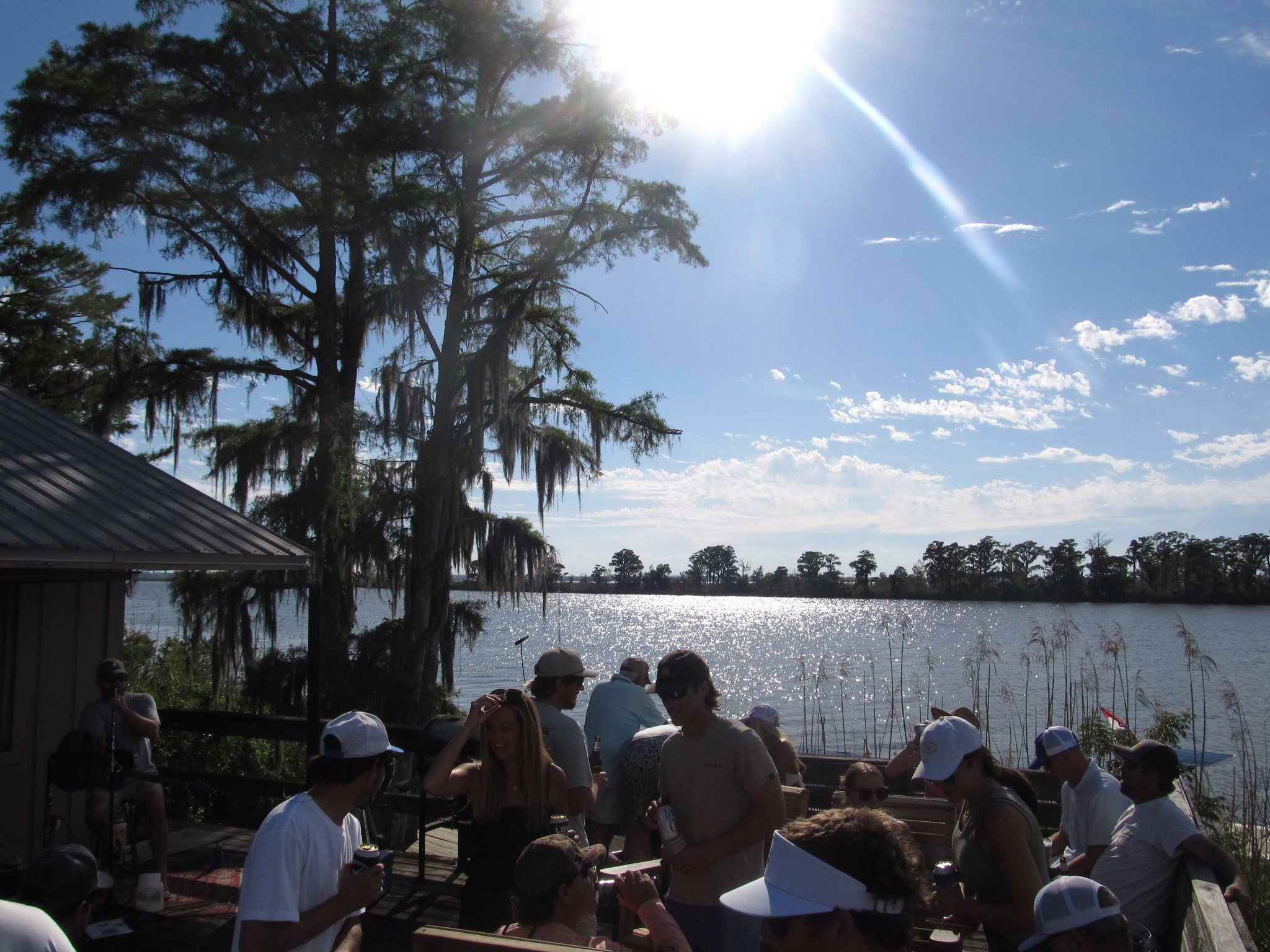
“You come here much?” I asked Kendall when we met at Braided River Brewing Company in Mobile. “Yes,” he said and explained he and his wife briefly lived nearby and they got to know the owner and staff pretty well. “They’ve started having team-building events at the camp. We take the whole Braided River crew to the camp every year.”
Kendall wants to bring the good news of the Delta to as many people as possible. He will gladly take anyone who will go or host any event that will get people there. He has two daughters but organized an annual father-son frog gigging trip in the Delta.
“We invited a bunch of friends, and got all these kids up there.” Many of them fell in love with the Delta, he said. Now out of college, Kendall sees some of them there today. However, his greatest attempt to expose people to the Delta, and preserve the community and culture that he became a part of, is the Poker Run, or officially, the Mobile-Tensaw Delta High Flying Chickasaw Poker Run.
Delta Poker Run
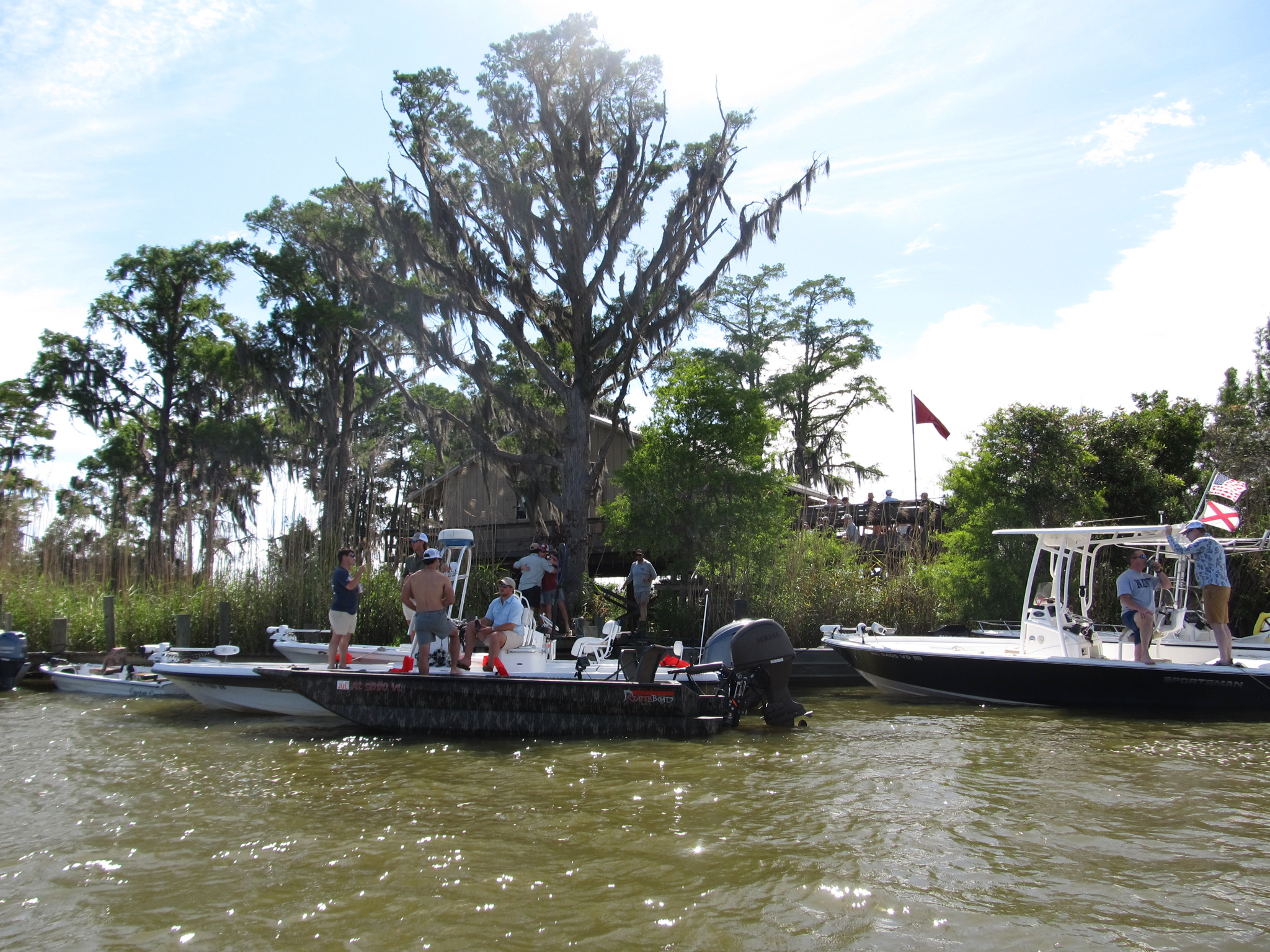
Now in its 17th year, the Poker Run is a Delta institution. Poker Runs are not uncommon. Kendall knew of them and had the idea in the back of his mind for years before organizing it in the Delta. Here is the gist of a poker run: certain places, in this case. Delta camps are dealers. Participants go from place to place and collect a card. You need five cards to play a hand. At a certain time, everyone meets at a designated location to play their hand. The best five-card poker hand wins the pot.
Kendall had flags made with the High Flying Chickasaw logo for all of the participating camps to fly on the day of the poker run. These camps welcome their guests, offer plenty of food and drink, they show off their camps, and they deal a card. The day culminates with more food and drink, live music, and the draw down.
A few side notes here: 1. A Chickasaw is a Delta salutation Kendall learned of one night at Liz’s. A sort of Delta gang sign. It is a wave in which your thumb and forefinger are extended while the others are curled into a fist. A high flying Chickasaw is simply the same gesture given very enthusiastically. Picture one hand turned wide open on the tiller handle of a Jon boat and the other giving a high flying Chickasaw. 2. Kendall goes to great lengths to ensure that the integrity of the game is not compromised. 3. The Poker Run is not a fundraiser, nor does Kendall aim to make any money from it. He covers his expenses, and everything else goes in the pot.
For Kendall, the goal of the Poker Run was twofold: to motivate people to get to their camps and do the necessary maintenance to host guests, and to use it as an opportunity to invite people into the Delta. He admits that in the beginning he was shooting for a large number of guests. “You want to see how many people you can get up there and entertain.”
He’s pulled back some, though. Now, he is focused more on camp participation. “The goal is to get all participating camps in that Delta, to know all the other camps up there, where they know the guy over there and feel comfortable riding over there just to bullshit. And if you’ve got a camp, you should be proud of it, and have people come to your camp, and that should give you a reason to go to your camp. For me, it’s just a matter of nurturing this community with fun activities involved with it.”
It is fun. If anything, Kendall has undersold it; he knows how to throw a party. There have been bands on pontoon boats on the river. There have been so many people on the deck of his camp he worried it would collapse. But, Kendall says he is ready to step aside as croupier of the Poker Run. He is hoping someone younger will step in.
Kendall’s wife has begun to question whether he should still be hanging out with that crowd, and he admitted that she may be right. Still, he is hedging his bets for the future. “If I’m going to be up there, the older I get, I want to know as many people around the Delta as possible, so when I need help, they’ll be there.” He is hoping for the same hospitality that he has given to so many.
Delta Rat
“There’s a label,” Kendall paused and leaned in like he might make a slur, “Delta Rat”, he said. “Now, you hear that term, but the people up there, they understand it. Everybody wants to be a “Delta Rat, but you have to earn it.” He used an analogy here. The people that understand it, that earn it, know what it’s like to “put the mud paddle down and start using the push pole.” If you spend enough time in the Delta, you inevitably get your boat stuck in the mud. When you do, a mud paddle may be your only way out.”
A mud paddle is used thusly: you stick one end of the paddle in the mud behind and under your boat, then you pull the other end. The paddle acts as a lever to push your boat, slowly, through the mud. There is a point, though, where the water gets just deep enough that when you pull, the boat will glide across the top of the water. And at that point, feeling a sense of relief and accomplishment, you pick up your push pole and push your boat as it skims through the shallow water.
It is still work, but it is not backbreaking work. Kendall is ready to pick up his push pole. He’s earned it. “A certain level of peace and joy is the return on your investment in the Delta,” he told me. Kendall is ready to cash in on that investment. He says he is ready to simplify, to slow down, to take his grandson to the camp to fish and swim and to enjoy the quiet in the Delta. But I’ll bet his flag will still be flying.
More from
Water Side of Scenic 98
category