.jpg)


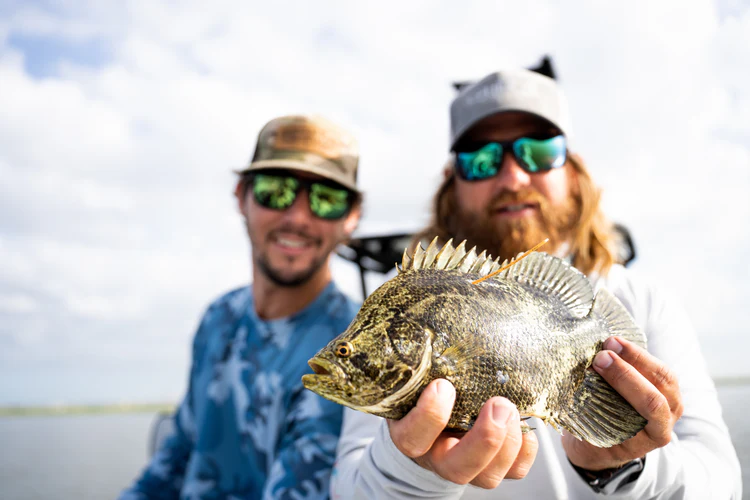
I thought I would open this article by poking fun at the peculiar fish that is the Atlantic tripletail, with its ugly disposition and curious habits. But after speaking with Lance Slater and Sam Glass in Spanish Fort about the Tripletail Classic, I took the causeway back to Mobile.
The sun was setting over the battleship and the Mobile skyline. The waters were calm and reflective on both sides of the road, and I thought to myself, man, what a beautiful place we live in. As I travelled just a few feet above sea level, Levon Helm was on the radio singing his version of the song ‘The Mountain’. The line “She gave everything she had, she gave, and now she’s gone” struck a chord. “She,” being the mountain in the song, “This mountain my home.”
I consider myself to be a conservation-minded individual. I enjoy my time in nature and do what I can not to harm any of the environments that I’m lucky enough to play in. I always imagine what a place might have looked like 100, 200, 500 years ago. Sometimes though, I think there are forces (social, economic, and environmental) too great to turn back the clock in any meaningful way. What is lost is lost, this line of thinking goes, and what remains, remains for now as some degraded version of what once was. Such an attitude leaves little room for hope, and when there is no hope, there is no action. I say all that to say this: thank God everyone doesn’t think that way.
Lance Slater grew up in Baldwin County. He moved away for school and work and returned after nearly a decade. An avid fly fisherman, he sought to get involved in the Baldwin County fly fishing community. He attended a fly-tying night at The Church Mouse years ago in Fairhope and hit it off with a couple, Noble and Danielle Davidson.
After tying a few flies and having a few beers, they decided they wanted to do something to help conserve and/or protect some part of the bay. They concluded that they would organize a fishing tournament that would help promote the sport of fly fishing and the conservation of our local waters. By the end of the night, they decided it would be a tripletail tournament.
There were a few reasons for this: Atlantic tripletail is a fun, accessible fish on a fly rod, they were aware of its growing popularity as a sportfish, and they were aware that very little research existed on the species. Thus the Tripletail Classic was born, a single species, ‘tag and release’, fly fishing only tournament designed to promote and support tripletail research.
As they fleshed out the idea, they discovered the Gulf Coast Research Lab (GCRL), a research facility in Ocean Springs, MS run by the University of Southern Mississippi, had a ‘Cooperative Sport Fish Tag and Release Program’. This program equips recreational anglers with a ‘tagging kit’, which includes data cards and corresponding tags, a tag applicator, and instructions.
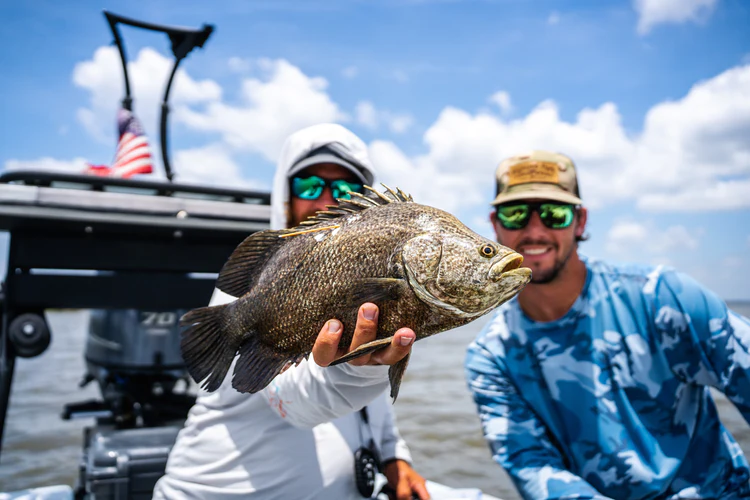
Participating anglers who catch the target species record a small amount of information on the data cards, tag, and release their fish. If the fish is subsequently caught, that angler calls the GCRL telephone number on the tag and reports where it was caught along with a few other data points. This program fit perfectly with the mission of the Tripletail Classic, so the team integrated it into the format. Every fish caught during the tournament is tagged using tagging kits provided by the GCRL.
For seven years now, the Tripletail Classic team has worked closely with the GCRL to provide tags and funding for research. On average, the tournament yields 30 Tripletails tagged and donates 100% of its proceeds toward triple tail research.
The Tripletail, named so because its dorsal and anal fins resemble its tail fin and are set back on the fish's body, giving it the appearance of having three tails. Commonly referred to in our area as Black Fish, Tripletail can be found in most tropical and subtropical seas across the globe. They are solitary fish that feed on minnows, shrimp, and small crabs.
Most peculiar is their feeding strategy. Tripletails float near the surface and turn nearly sideways next to some kind of structure at the water's surface (i.e., crab trap buoys, channel markers, or floating debris). They change color to match their environment and let their meal come to them, ambushing their unsuspecting prey.
Tripletail are pelagic, meaning they live offshore, and they are semi-migratory, meaning they travel into bays, sounds, and estuaries to feed or spawn. However, little is understood about these movement patterns as they pertain to the Tripletail, and this is the focus of much of the research being done.
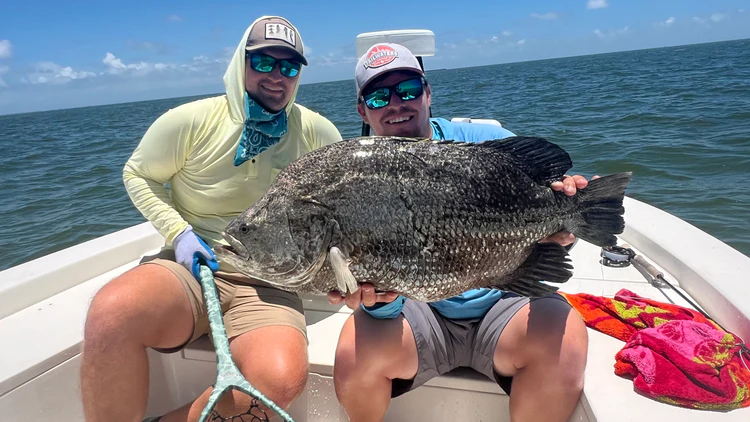
Sam told me that there were two fish tagged during the tournament in the Mississippi Sound; one was caught again and reported in Texas, the other in the Florida Keys. Lance said he had a friend who had a tripletail next to his wharf for a full year. Considered by researchers to be a “data poor” species, there are more questions than answers when it comes to tripletail.
What is known is that they put up a good fight and they are good to eat. The tournament founders picked up early on a trend that has continued through today. Fishing pressure on this species is increasing. Scientists need to understand more about movement patterns so they can understand how many fish are migrating into our waters, and how often, to gauge if the population is being strained. Based on this information, they can recommend bag and size limits that will help ensure the species is not put in danger.
As pressure on these fish has increased, so has the pursuit of data. Since the tournament's inception, its founders have witnessed more universities and organizations jumping on board to collect data and do research. Maybe more notably, they’ve witnessed these organizations begin sharing data and working together on projects that span multiple states, such as tripletail migrations. For instance, the University of South Alabama (USA) announced in January that it had received funding for tripletail and cobia research that will span the five Gulf states in participation through the Gulf States Marine Fisheries Commission.
The sport of fly fishing has grown in popularity in recent years as well. Promoting the sport in this area is also a big part of the tournament. The tournament culminates with an awards banquet that is open to the public and hosts many fly fishing vendors and tournament sponsors.
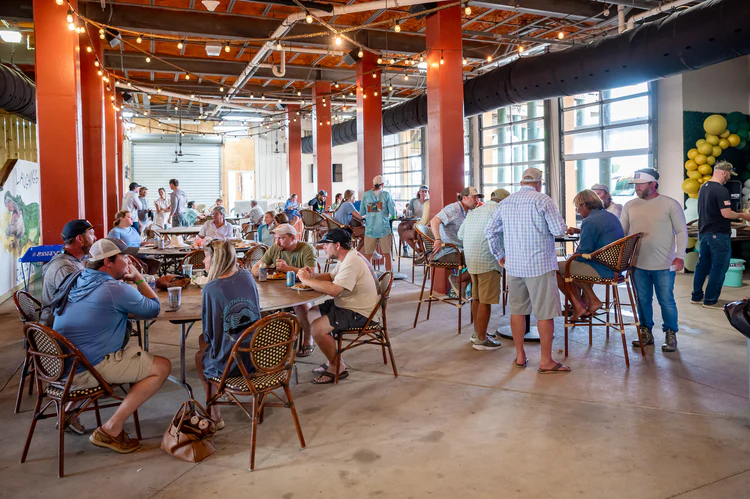
The banquet also hosts several local conservation organizations that present the good work they are doing. For participating teams, there are awards for the first fish caught, the smallest fish, the largest fish, and an overall points winner. There is an award for the team that picks up the most trash during the tournament as well. Last tournament, participants collectively picked up 55 lbs of trash out of local waters.
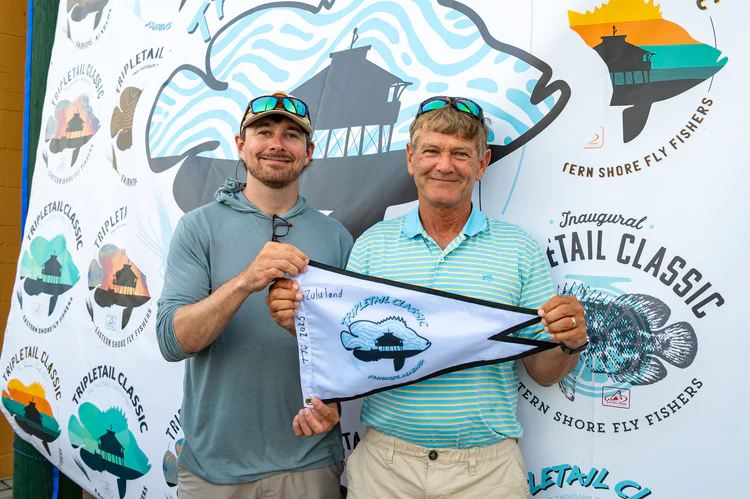
I asked Lance and Sam how they felt about the influx of people into the sport. They were genuinely excited to see it growing and acknowledged that fly fishing culture has shifted away from the Orvis aesthetic and towards everyday anglers that are looking to branch out. “I’m okay with people doing things the hard way,” Lance said. We talked about fly fishing and how we got started. Sam talked about his first job in a fly shop in Virginia and the sense of discovery he has gained through fly fishing. Lance talked about how fly fishing helped him cope with loss. Never the one to sit still, the movement of the cast is what attracted me to fly fishing.
Where and with how much pressure a fly rod bends is called its action. The action of the rod propels the line, which carries the lure (the opposite is true in traditional fishing: the weight of the lure carries the line). When done correctly, it is a thing of beauty. To take up fly fishing with any seriousness is to take up a challenge, to accept the fact that success will not come easily.
Conservation work requires the same ethos; success is hard-fought, but there is beauty in the action. This tournament and its network of organizations are taking action and offering hope for our home.
More from
Water Side of Scenic 98
category