.jpg)


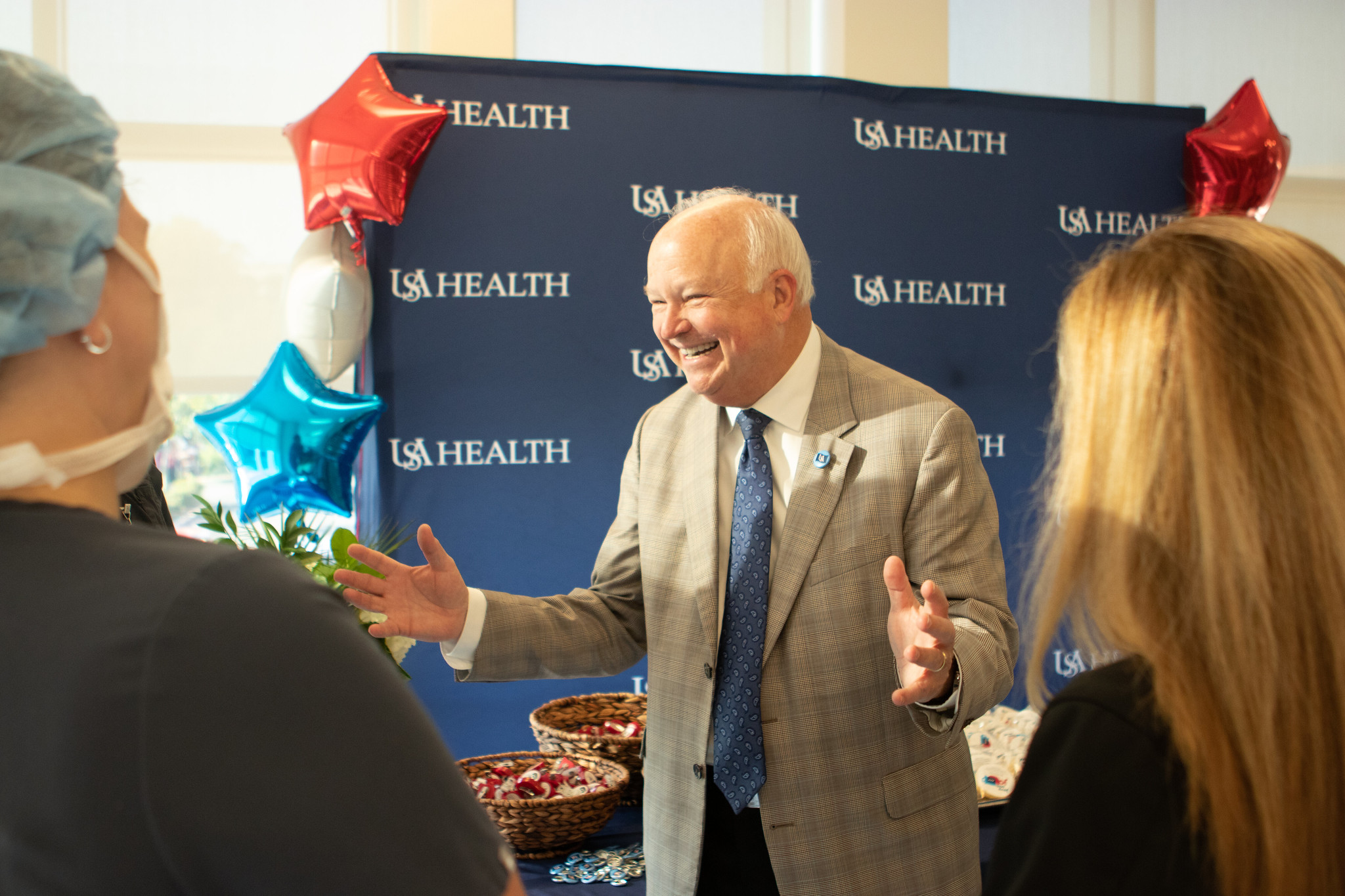
The University of South Alabama campus in Mobile is close to my childhood home. I remember when the campus construction was first announced, in 1963. I was a young boy, and the implications didn’t really register at the time, but I did watch it grow in both size and stature over the years. My respect for South Alabama grew substantially when, early on, a close family friend, Dr. Neal Rowell, was hired as a professor in the physics department.
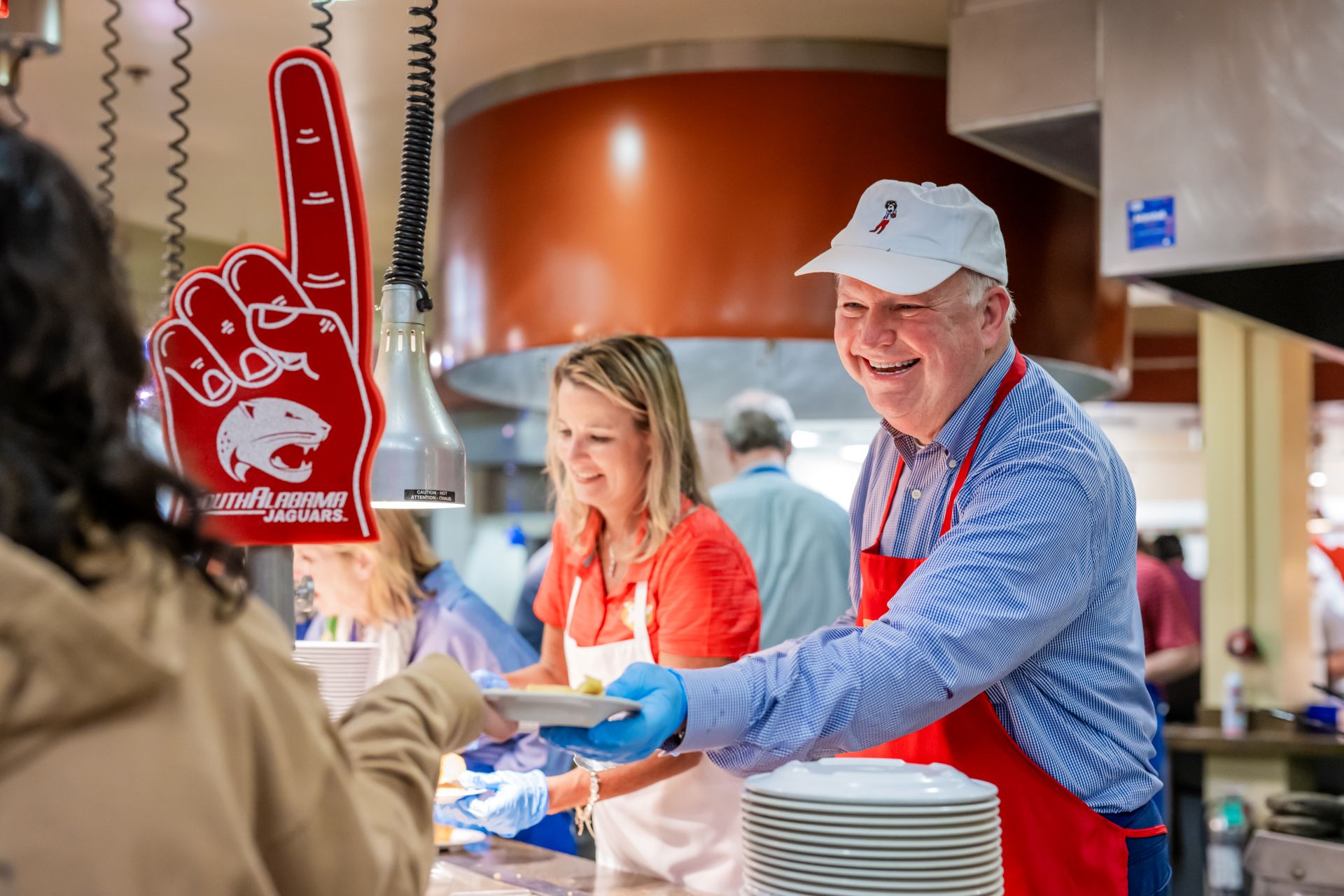
Before setting out on its own, South Alabama began as an extension campus for the University of Alabama in downtown Mobile. It has now grown to over 14,000 students with nationally recognized programs in nursing, marine and environmental sciences, business, education, engineering, and medicine among the many disciplines it offers. It is proudly referred to as the Flagship of the Gulf Coast.
Josiah Robins (Jo) Bonner, Jr. currently serves as South Alabama’s fourth President. Now beginning his fifth year, I sat down with President Bonner to get an update on the school, how far it has come over the years, and how he matriculated to become its president. I was interested in hearing the “back story” as his career took him through several positions of leadership representing the state of Alabama.
I first became aware of Jo Bonner during his time as a U.S. Representative for Alabama’s 1st Congressional District. We became better acquainted when he became the University of Alabama System’s Vice Chancellor of Government Relations and Economic Development in 2013. He later became Chief of Staff for Governor Kay Ivey in Montgomery. I got to know him better when he was a board member and supporter of the Alabama School of Math and Science in Mobile when Linda served as its Director of Development.
Jo is frequently on South Alabama’s Fairhope campus (recently rebranded, USA By the Bay) to introduce guest lecturers, so Linda and I get to visit with him from time to time. He is always friendly, appreciative, and has a genuine smile and welcoming manner. He is a really good guy who is engaging, thoughtful, and accomplished.
Now serving as the 4th president of the University of South Alabama, I was excited to learn more about his illustrious career path. I wanted to better understand why so many remarkable trailblazers and community leaders emanate from Camden, Alabama, a small Black Belt community in Wilcox County.
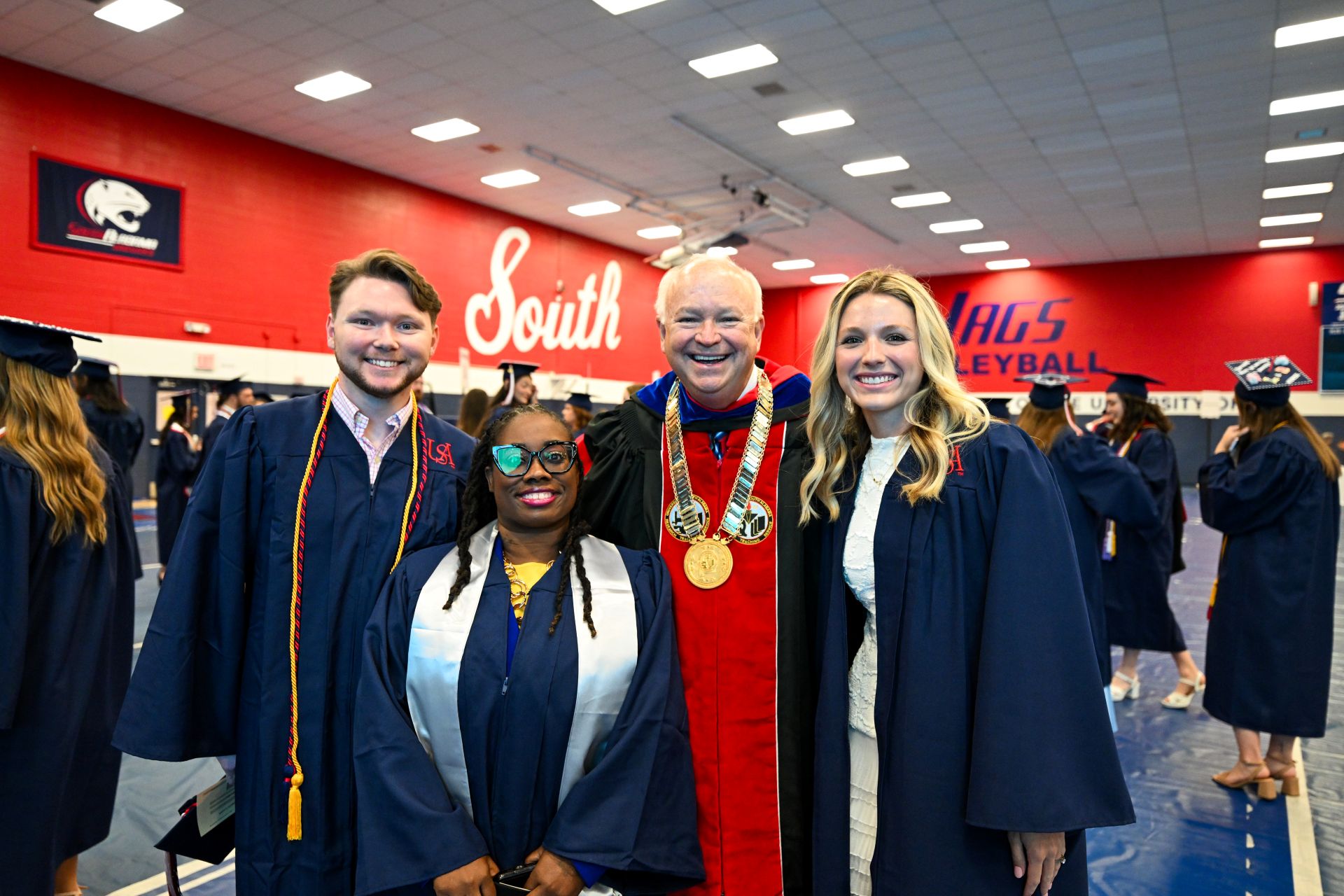
Jo is understandably proud of the University of South Alabama. “South” counted 276 students in its first class in June of 1964. Today it has students from all 50 states, 58 countries, and all 67 counties in Alabama. It has grown its on-campus residency to almost 4000 students (with no community bathrooms, he tells me proudly), and when including the rapidly growing USA Health System, employs just under 12,000 faculty, staff and health care providers. It is the only campus with both an engineering school and a medical school between Gulf Coast cities, New Orleans and Tallahassee.
Jo tells me it took South Alabama only 61 years to reach 100,000 graduates, whereas, in a different time, it took Auburn 121 years. That demonstrates the growth and vision from its inception.
Thirty-one percent of the recent graduating class are first-generation college graduates. Currently beginning a $400 million capital campaign, new opportunities abound for a growing campus, with exciting programs being developed, and a 10-year plan underway. “I very likely won’t still be president to see it finished, but it is an exciting time to be part of a big, bold plan for the future.”
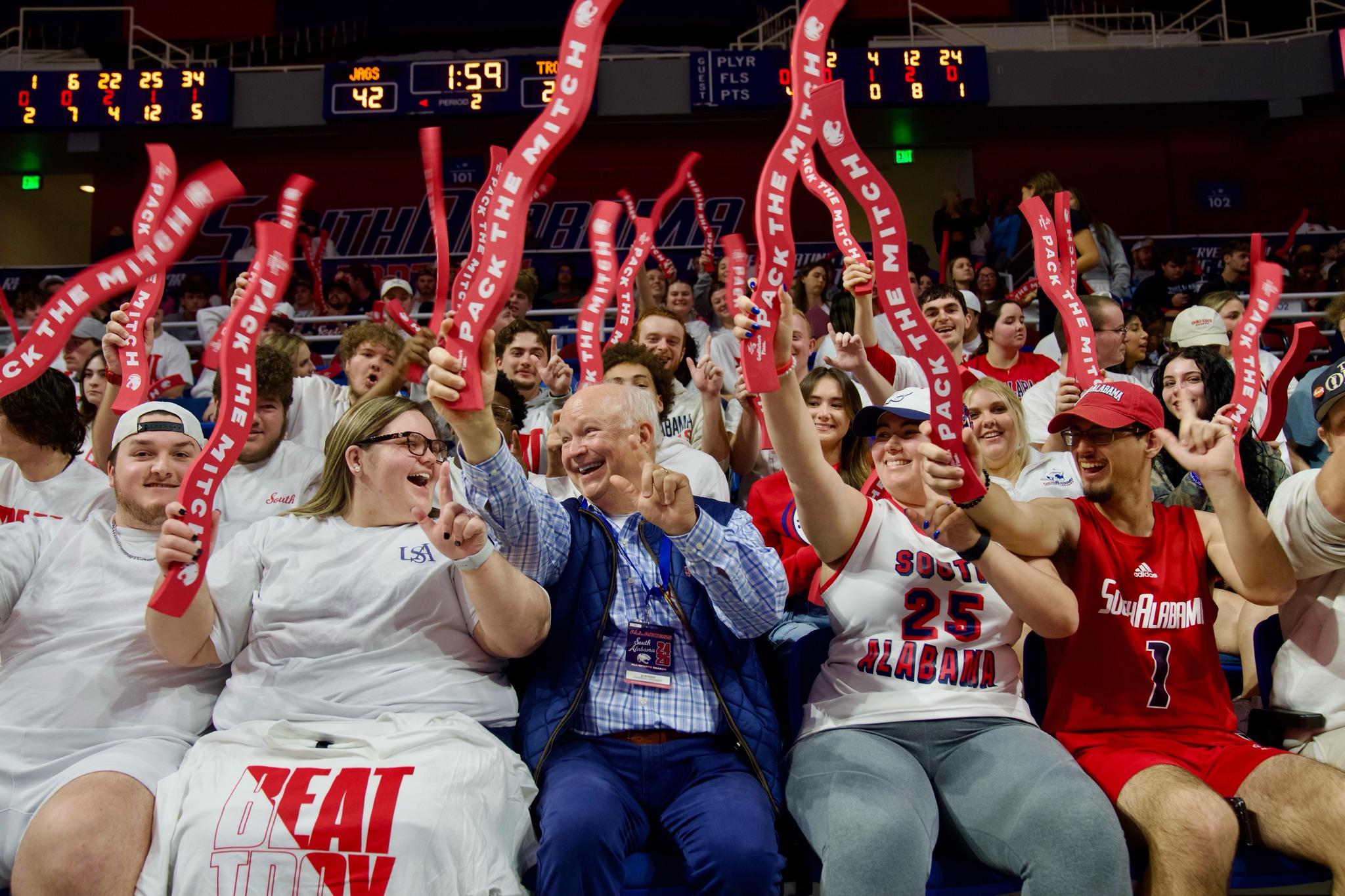
Our conversation moved from politics to economic development, and on to educational leadership. Jo is a humble man and credits his upbringing in Camden for shaping his life.
“Growing up in a small town, my parents were always among the first to raise their hands, volunteering for whatever they felt was for the betterment of the community. That left an indelible impression on me. They taught me to do things with integrity and to dedicate myself to always trying to make a positive difference.
Camden, Alabama has produced the likes of Jeff Sessions, Kay Ivey, and Jo’s sister Judy Bonner, who went on to become president of The University of Alabama. Growing up in Camden, Jo was affectionately called “Little Jo” by Kay Ivey and his older brother, Jim, when they rode horses together.
His father left a successful law practice in 1969 to serve as Probate Judge for Wilcox County, and also was the Juvenile Court Judge. His mother served for years as the county’s health nurse. Community service came naturally to the Bonner family. Jo remembers his father receiving a call at home from Dr. Martin Luther King, Jr. when he was a child, at the height of the Civil Rights movement.
“My father was all about keeping the peace in our community. Those were turbulent times in the late 60s across several fronts.” His father died of a massive stroke when Jo was just 13 years old. “I was taught the Golden Rule and that there is a right way to do things, with integrity, and to make a positive difference,” he says. “That’s what inspired me to get into politics.”
In college at The University of Alabama, he studied journalism, political science, and history. He interned as a student for U.S. Representative Jack Edwards in Congress. After graduation with a degree in journalism, he helped run Sonny Callahan’s campaign to succeed Jack Edwards in Washington, D.C. He later became Representative Callahan’s Press Secretary, then Chief of Staff.
“Jack Edwards and Sonny Callahan were two of the most respected people in public life in Alabama,” says Jo. “I was honored to give the eulogies at each one's funeral.”
Shortly after Callahan announced his plans to retire from Alabama’s First Congressional District in March of 2002, a crowded field of potential candidates began to form. He was encouraged by many to run for the seat being vacated by his longtime friend and boss.
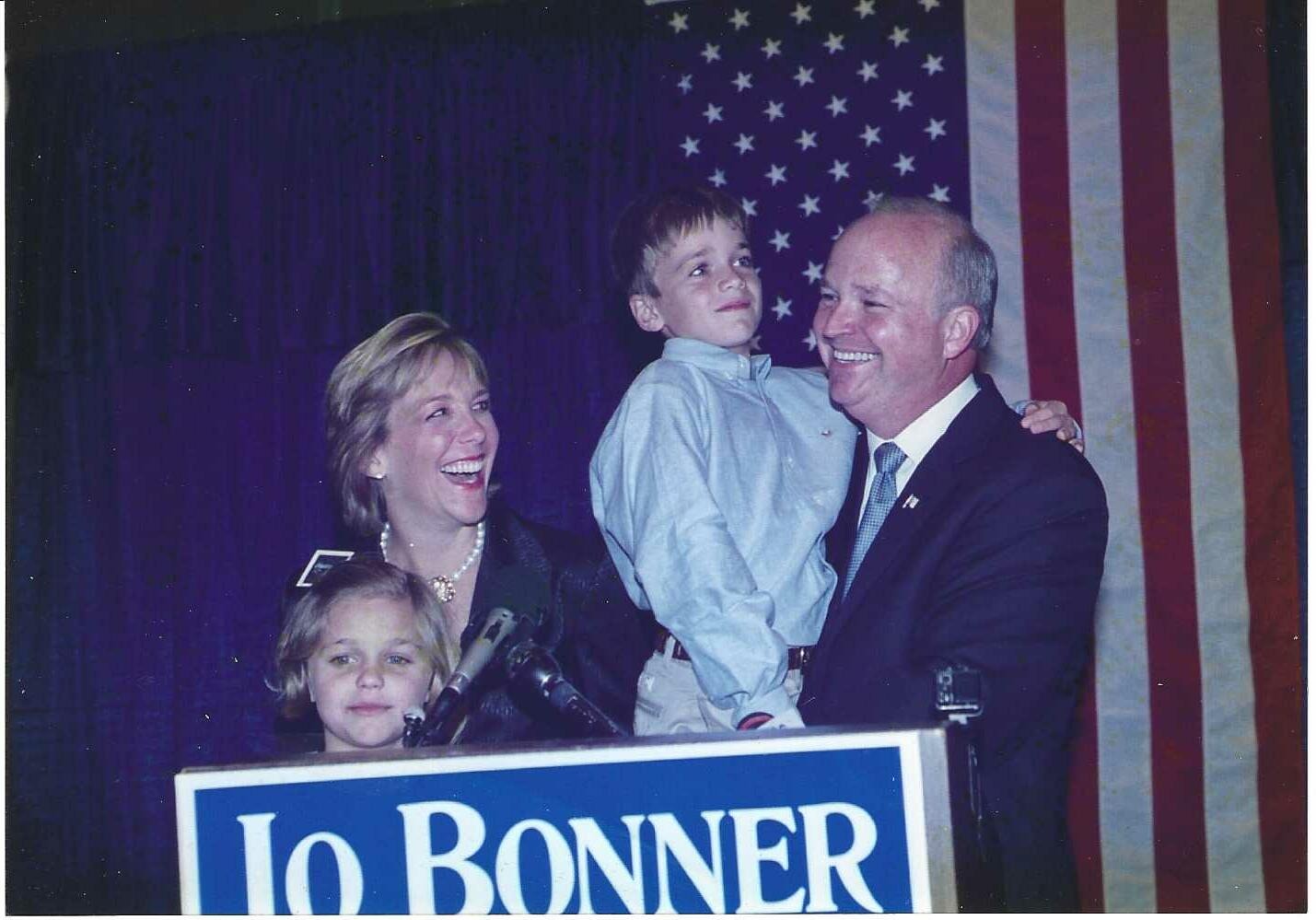
“Relationships are important,” Bonner said, “and even though we started the campaign with a lower name ID and fewer campaign dollars, I had the advantage of having spent 18-years working with Sonny and many of the leaders in the different towns and counties that made up the First Congressional District. I considered many of these leaders to be close friends, and they deserve as much credit as anyone for helping to make our first campaign a success. I’m especially proud of the fact that by the time we had finished our sixth and final political campaign in 2012, we had made a point to never run a negative ad.” He won his first election to Congress in November of 2002 at age 42 and began his first term on January 3, 2003.
As we are sitting in Bonner’s office on campus, he has a framed photo of a 30-year-old freshman congressman, John F. Kennedy, sitting behind his desk in Room 315 of the Cannon Office Building, across the street from the U.S. Capitol. “I had the same office, 315 Cannon, when I got elected to Congress,” he says. There is also a bust of President Ronald Reagan on a side table. “I often refer to his self-deprecating humor when giving addresses,” he says. “Both presidents were great communicators, and even though they were from different parties and served at different times in our history, they each serve as daily reminders to me that we are all in this together.”
We discuss the current state of politics. “Politics has become increasingly negative, polarizing, and mean-spirited. I hope we can get back to being more civil toward each other. I tell our students all the time that our differences aren’t that far apart; both Democrats and Republicans love their country… they just have different philosophies about the role of government in our lives.”
Bonner tells me that since he became South’s president, he makes a point to try to find common ground where both sides can find a way to work together no matter what the issue is. “A few weeks after I began my work at South, a group of College Republicans asked if I would come speak to their group. I told them I would be happy to do so but only if they would invite the College Democrats to attend as well. At first, they thought I had lost my mind, but when we finally got everyone together several weeks later, I served pizza to both groups of students and listened in as they realized they all face similar concerns as college students… the cost of tuition, how to deal with a difficult class, or the challenges of having a sick relative.”
All told, Jo spent 28 years in Washington and was elected to six terms in the U.S. House of Representatives. He tells me he created a lot of angst among his constituents when he voted in favor of TARP, a financial bailout package, in 2008. “The world economy was close to a global depression. My parents went through the depression in the 1930s, and I thought we had to do something to avoid going through that again. While it was a difficult vote, politically, time and history have shown that those companies we helped out paid back the loans, and we avoided an economic catastrophe.”
He was close to running for governor after Bob Riley’s tenure was ending in 2010. “A lot of people from around the state were encouraging me to run, including Governor Riley. One day, while I was still trying to make up my mind, I was hunting with my son, Robins (he was 12 years old at the time). He killed his first deer and said, ‘This is the best day of my life.’ I asked, ‘Because you killed a deer?” “No, Dad,” he said, "Because I’m with you.” I made the decision then and there to get out of politics. I had already missed too much time with my family.”

Jo credits his wife, the former Janée Lambert, for being instrumental in his success every step of the way. “She was my unpaid campaign advisor, my chief strategist and my closest confidant and biggest supporter throughout my career. She has encouraged me in every career move we’ve made and always made sure Lee and Robins were taken care of even when I was in Washington and couldn’t be there.”
During his time in Congress, Jo served on the powerful House Appropriations Committee as well as served as chairman of the House Ethics Committee. “It is the only committee in Congress that has an equal number of Republicans and Democrats serving. “I sat down with the Ranking Democrat at the beginning of my time as chairman, and we both agreed that we would work hard to always have a unanimous vote on whatever the matter was, making sure to keep politics out of any decisions. I’m proud to say we accomplished that task.”
While serving his last term in Congress, he received a somewhat urgent phone call out of the blue from Dr. Robert Witt. “I was hosting a lunch in the Capitol for a family from Monroeville who had lost their father, who was being buried at Arlington National Cemetery. Dr. Witt had just become chancellor of The University of Alabama System after serving as president of The University of Alabama for several years. “I need you to come to Tuscaloosa to run our government relations and economic development office,” he told me. “It was totally unexpected.” Beginning in August of 2013, he served as vice chancellor for the next five years.
Through his close friendship and Camden roots with Kay Ivey, Governor Ivey asked Jo to leave Tuscaloosa to come to Montgomery to serve as her chief of staff. She had inherited the job when Governor Robert Bentley resigned from office in April of 2017, and she was planning on running for a full four-year term for governor in the next election.
In late 2018, Jo moved to Montgomery. “Most people don’t realize all the demands and important decisions that land on the governor’s desk,” he said. “Moreover, Alabama was in a mess of hurt. The chief justice of the Supreme Court had been removed from office, the speaker of the House had been convicted of a felony, and Governor Bentley had resigned from office. And with just a few hours' notice, Lt. Governor Kay Ivey was about to be sworn in as the state’s 54th Governor.”
“Not long after I joined her team, the governor was trying to get the biggest road and infrastructure bill passed by the Legislature (which she did), and she was also busy cleaning up the mess in Montgomery. A year later, the global pandemic, COVID-19, was taking a deadly toll everywhere – Alabama was no exception – and yet, thanks to her leadership, Alabama had a steady hand at the wheel. As the governor winds down her final term in office, she can look back with pride on the fact that during her time in office, she has created more than 100,000 new jobs and Alabama has seen investments totaling more than $69 billion.” Governor Ivey spoke at Jo’s installation ceremony when he became President of South Alabama.
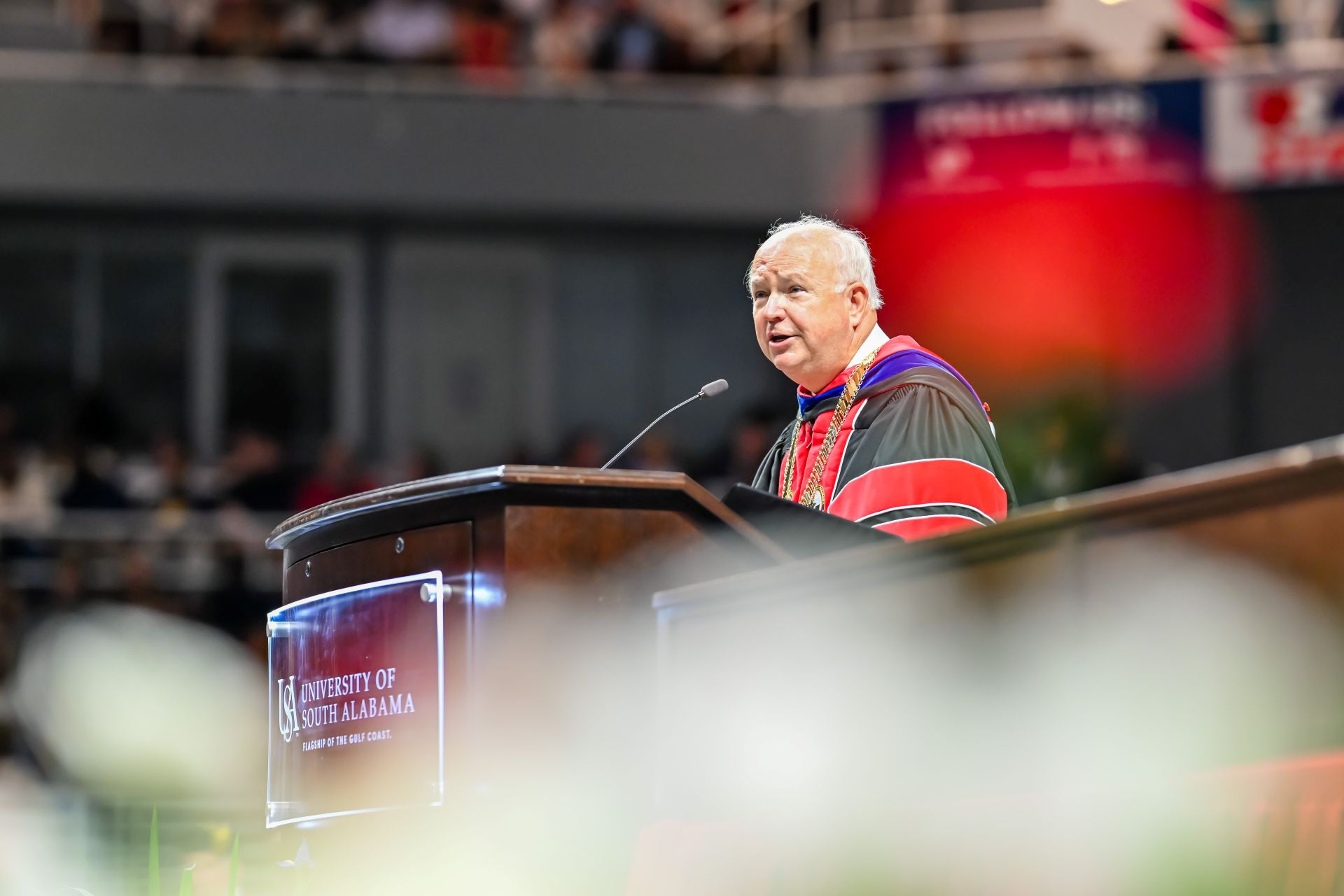
In 2021, when Dr. Tony Waldrop announced his retirement as South’s president, Jo was encouraged to apply for the position even though he lacked a terminal degree, such as a Ph.D., that many university presidents have. However, his 28-year experience in Congress working for the people of Alabama’s First District, his economic development experience recruiting the likes of Airbus and ThyssenKrupp to Alabama, and his extended network of friends and business associates were qualities the South Alabama Board of Trustees believed would be valuable in leading the next phase of the University’s growth.
Without a Ph.D., several of the faculty were initially skeptical. Bonner told me he understood their concerns but that when he first arrived on campus, he asked the faculty to “meet me halfway before passing judgment.” After visiting for an hour or so in his office in the Frederick P. Whiddon Administration Building, the first building erected on campus and named after the University’s first president, we loaded up in his golf cart to tour the campus.
Everyone we passed stopped to say hello and offer a kind remark. Jo calls everyone by name, thanks them for a recent kindness, and it’s obvious the respect and friendliness are genuine. The campus, which now rivals the size of The University of Alabama (more than 1,200 acres), is beautiful, spacious, and sparklingly clean. Jo believes in leading by example. If he sees a piece of trash on the ground, he picks it up and disposes of it.
“It may seem to be a small thing, but people are paying attention to how you lead. My philosophy has always been to surround yourself with good people. It is a recipe for success.” As we wrap up, we talk about the current capital campaign and the new programs and buildings underway that will bring with them new opportunities.
“Airbus is moving their engineering center from Brookley Aeroplex out to our campus, which will enable our students and faculty to work closely with one of the world’s leading aeronautics and space companies. The new $290 million medical school, currently under construction on University Boulevard, will increase enrollment from 80 students per class, up to eventually about 120 medical students per class, and its impact on the healthcare industry in our area is profound.”
He goes on, “A portion of Three Mile Creek that runs through campus will soon become a new shallow water lake that will house an outdoor classroom and research area for the Stokes School of Marine and Environmental Sciences, one of the fastest growing programs of its kind in the nation. And the Nursing School is the largest in the state with a 99% first-time pass rate for its graduates (the national average is 94%). With three hospitals, a comprehensive cancer center and a brand-new medical school to go along with nursing and allied health professions, we offer unparalleled practical experience.”
All this bodes well for the University of South Alabama as it works to complete its current capital improvement projects. Called Where Bold Begins, the new capital campaign epitomizes the vision for the future. Jo proudly shares the creed that he and others created after he became president, called The USA Way.
“When I was interviewing for the presidency, someone responded to something that was said by saying, “That’s not the USA way.” Continuing our conversation, a few minutes later, they responded to something I said by saying, “But that is the USA way.”
“The message to me was clear: in everything we do, we all need to try to do things the right way. That is what has become known as “The USA Way.” Jo convened a small group, led by himself and his executive vice president and provost, Dr. Andi Kent, to help write and adopt The USA Way creed soon thereafter.
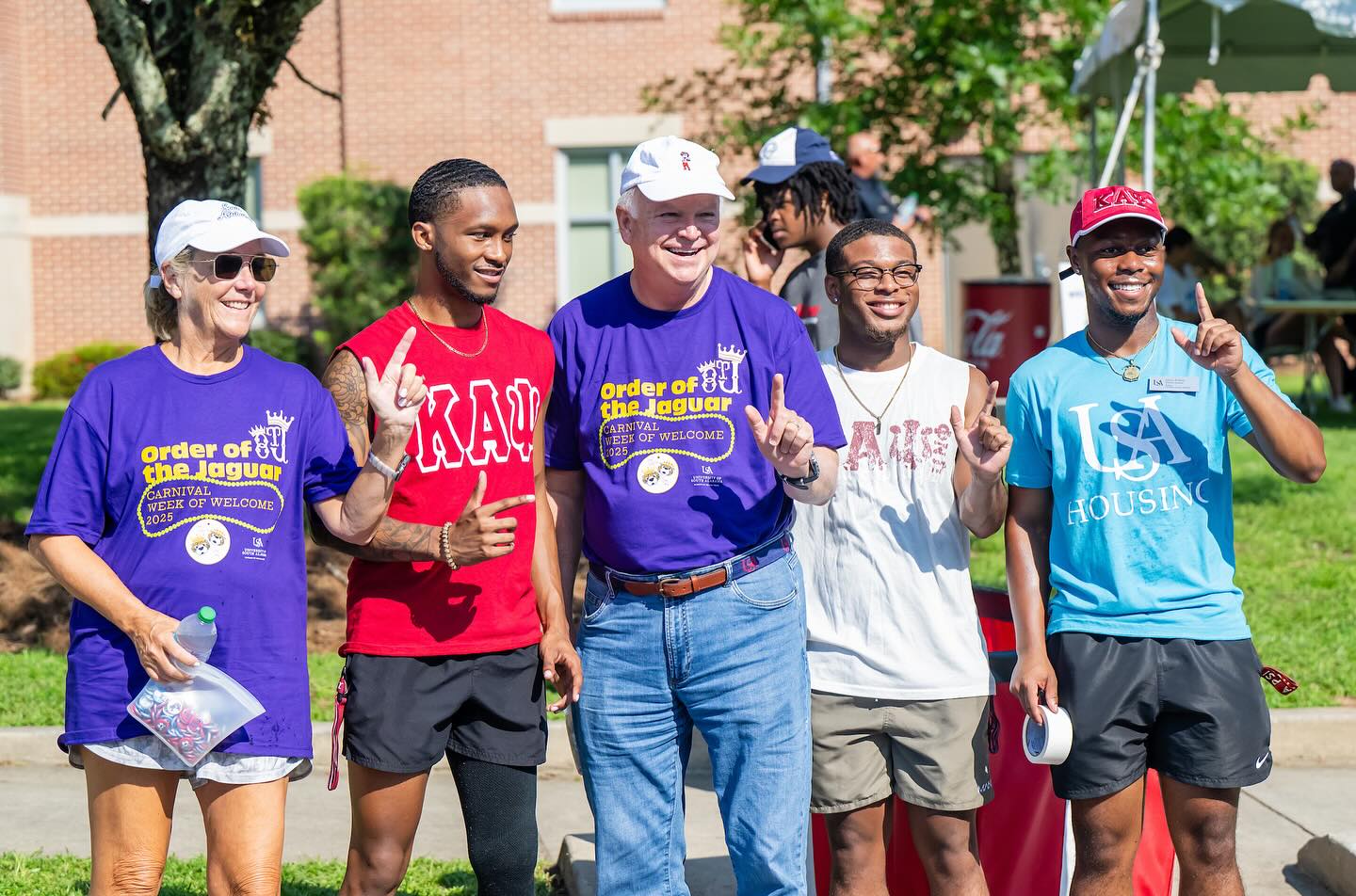
You can see this philosophy has been embraced by everyone on campus: students, faculty, staff, alumni and corporate partners. It is a recipe for a bright future and a beautiful thing to witness in action.
In closing, I asked about his career and why it appears he never hesitates to take on the next challenge. “Nothing I’ve ever done was necessarily a planned career move. When opportunity knocked, I opened the door, knowing the Good Lord has always looked after me and provided opportunities I could have never otherwise imagined.”
Thank you, President Bonner. We are grateful for your commitment to service, helping others, and your leadership. The future is indeed bright!
More from
Community Endeavors
category