.jpg)


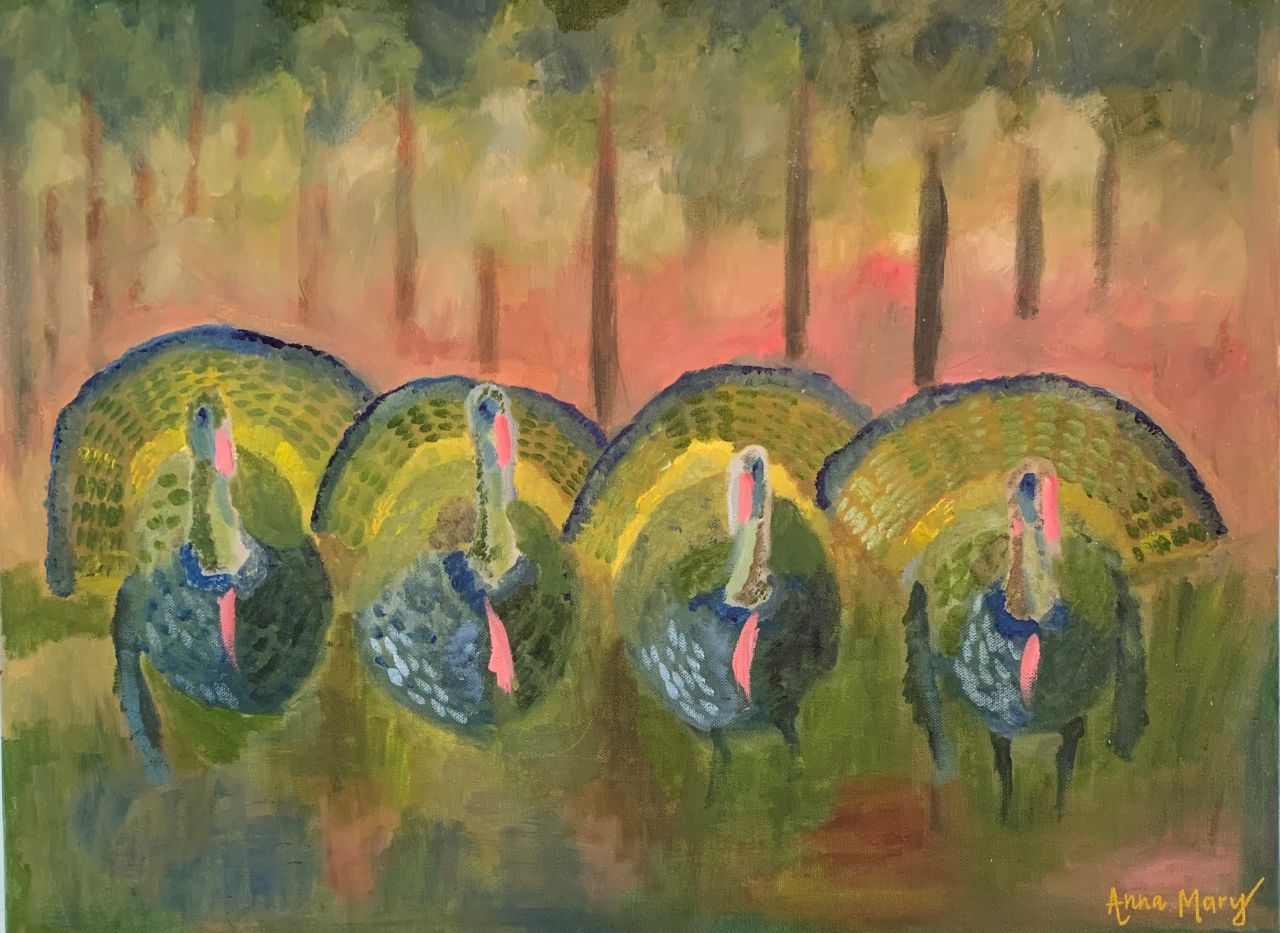
Spring turkey hunters have long held themselves in high regard. They are considered (by themselves) to be cerebral, spiritual even, when it comes to their craft. They are the higher order of huntsmen, the gentle woodsmen.
Turkey hunters in the spring woods use their intellect, cunning, and superior woodsmanship to outwit an animal that can see a gnat’s ass from a mile away, hear the twig break from the moon, and appear and disappear like a specter. While many have put their hands on an unalived turkey, it is debatable that the eastern wild turkey, in the wild, is made of the same earthly stuff as other material beings. This is the challenge of the spring woods, and those who are successful inhabit a headspace that is sublime, if not a bit braggadocios.
Spring is a time of renewal and rebirth, growth and transformation, hope and optimism. With warming temperatures and increasing daylight, nature, recently dormant, comes to life. The forest floor is dense with shrubs and wildflowers before they are shaded by the overstory. The clover is blooming in the fields. Trees begin to bud their bright green leaves. Animals are coming out of hibernation. Migratory birds are making their way back north, bringing along a cacophony of song. And the turkeys begin to gobble.

Spring is mating season for turkeys, who sleep in trees. At daybreak, male turkeys gobble from their roost to make their presence and their intentions known to the females in the area, as well as any male competitors. Eventually, the males and females fly down from their respective trees. The males strut and fight, and the females play hard to get. Turkey hunting strategy often involves listening for a male turkey to gobble at daybreak, going to where the hunter believes he will fly down and calling to him (with various devices) posing as a not so hard to get female.
Like a hibernating box turtle crawling out of the ground, spring turkey hunters emerge from the soil, stretch their arms and legs, then stick their necks out, first to listen. I have always enjoyed watching the sun come up in the woods, no matter the season, but springtime is magical for all of the aforementioned reasons. Not least the powerful and visceral gobble of a male turkey which you can feel in your gut, reminding you that you are at the same time, part of nature and a total foreigner in it. On a recent outing, it dawned on me that part of the magic of turkey hunting is that you are forced to listen and be still, hearing the spring woods come alive.
Humans today are inundated by sound, not only from our need for constant entertainment but from cars, planes, lawnmowers, you name it. My kids are merciless polluters of noise. Studies show that noise pollution can lead to mental health problems, increase stress, and cause cognitive impairments. On the other hand, studies show that listening to natural soundscapes lowers stress, improves mood, and enhances cognitive performance. Go figure, right?
So, next time your turkey hunting friends seem a bit smug, overly confident in their “enhanced cognitive performance,” know they are not personally to blame. They have been forced to become an active participant in one of nature’s grandest ensembles and are merely reaping the benefits. Soon enough, they will go back into their shell and return to the earth.
1. https://www.uclahealth.org/news/article/4-surprising-health-effects-noise-pollution
More from
Sports & Fitness
category


David Miller: Always a Bulldog!

The Rites of Spring