.jpg)


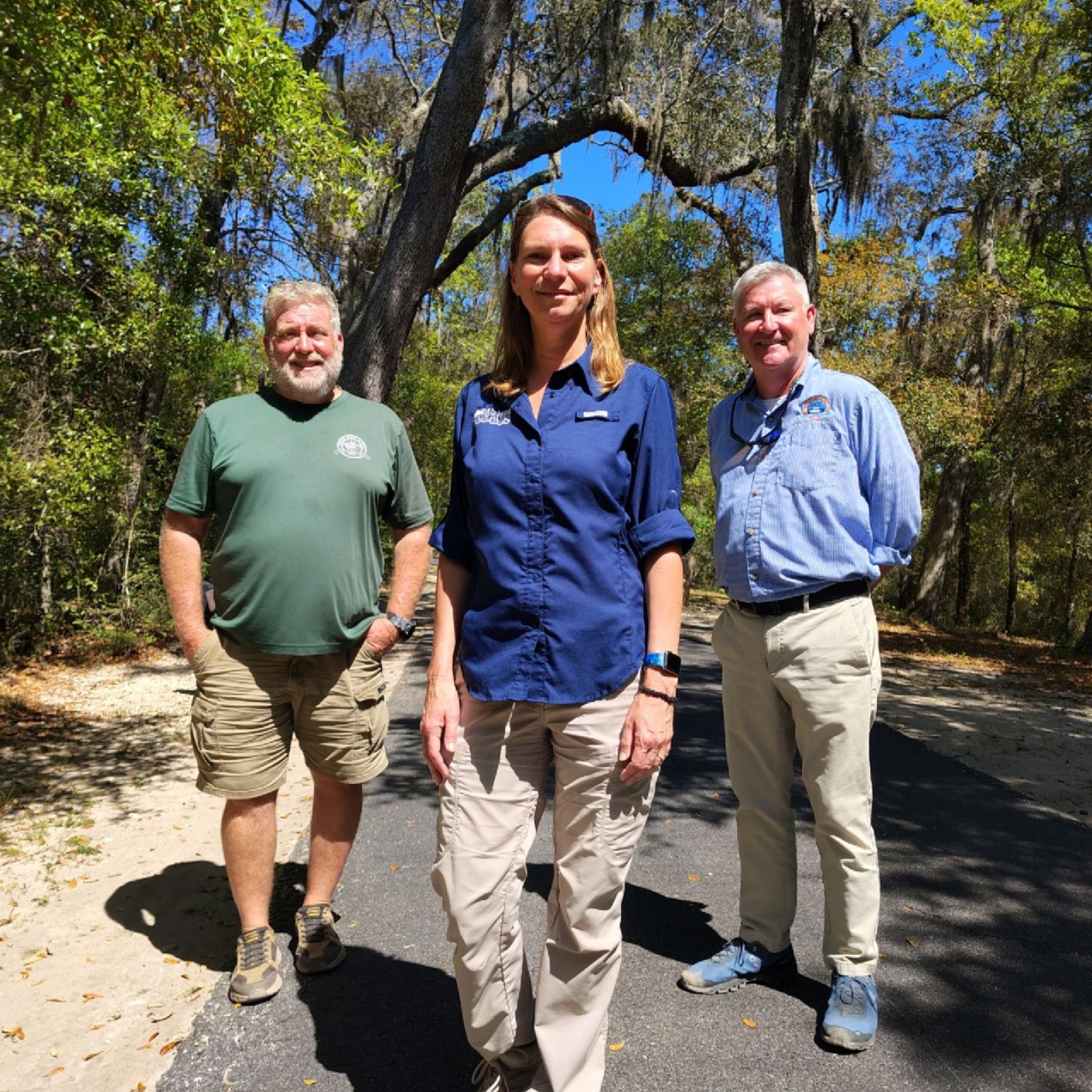
Lots of people love the Alabama coast for its beautiful beaches, its many open-air restaurants, and its easy access to saltwater fishing, but it was something else that drew Norman and Jane Lindsey Thomas to the area. They were camping at Gulf State Park and set out on a bicycle ride that would change their lives.
It was just over 16 years ago when they discovered the Hugh S. Branyon Backcountry Trail, which quietly covers 28 miles in Gulf Shores and Orange Beach. Generally obscured from motorists in the area, the network of paved and unpaved trails snakes along the mostly undeveloped area south of Canal Road and just north of the Gulf beachfront. The trail winds and crisscrosses along much of the park's 6,150 acres in Gulf Shores, as well as a much smaller amount of city-owned land in Orange Beach, which the Thomases have called home since quickly deciding to relocate from Homewood in metro Birmingham.
"It was in February of 2010. I remember it vividly," says Norman. "We were riding on the trail, and Jane said, 'Hey, I could live down here.'" Rolling behind her on a bike of his own, he had the same feeling. He especially liked how the trail was mostly flat and seemed like such a safe and peaceful place to get some exercise. His next thought was wondering how soon they could put their house back home up for sale.

Phillip West loves hearing stories like this. He is the director of the Coastal Resources Department for the city of Orange Beach and is the man who had the initial vision for the trail nearly 25 years ago. He has been heavily involved every step of the way as the backcountry trail has blossomed into the community's top coastal attraction other than the beach itself, with well over two million visitors a year, according to a recent study done by Jacksonville State University's Center for Economic Development and Business Research.
Going back to its beginnings, Phillip was a young grad student working with the Dauphin Island Sea Lab when he was sent over to do an environmental evaluation of some land the Nature Conservancy was considering acquiring from Orange Beach. The undeveloped acreage was known as the Gulf Oak Maritime Forest, and Phillip became fascinated by its historical and ecological significance. He explored it further when he came to work for the city of Orange Beach.
"When I moved here, I would use those old trails to hike in the park, but they were pretty much closed," he says. "It was old service roads, old jeep trails, and fire breaks that were pretty much linked together but weren't improved," Phillip says. Some long, narrow trenches in the ground caught his eye, so he dug into the history of the area a bit more and learned that the neglected east-west thoroughfare seems to have been used for thousands of years. "This has been a highway for eons," he says. "The Native Americans were using it, so the explorers just used the same path rather than blazing their own, and then the settlers used it, too."
He approached the mayor of Orange Beach at the time, and then Branyon, the longtime superintendent of the state park, with the idea of improving those existing roads and trails and developing them into an easily navigable trail that would link Gulf Shores and Orange Beach and show off the many acres of unspoiled natural beauty. Everyone loved the idea, but not the price tag. "But then we got lucky with some grants," Phillip says, and the first of the funding went to pave the first stretch, which was nearly two miles of the old Catman Road in Orange Beach. Eventually, and with more financial assistance as compensation for the BP oil spill that happened in 2010, the trail would extend around the Lodge at Gulf State Park on the beach as well as the Lake Shelby day-use area. "It took us several years to get 14 miles built," he says, "and then the state built 14 miles in one fell swoop."
For people like Norman and Jane, all of this effort and funding adds up to a beautiful and relaxing change of pace. They hadn't had as many opportunities to get outdoors while living in their bustling suburb in north-central Alabama. Here on the Coast, it's a regular part of their lifestyle. Their favorite trailhead, which is one of nearly a dozen access points, is a short drive from their home. Three or four times a week, usually right after breakfast, they can easily get their exercise while enjoying the remarkable scenery that they never get tired of seeing.
"I don't like riding my bike on the roads with cars," says Jane. "I just won't do it, and when we discovered the trail, it was just thrilling to find some place that we could ride safely for long periods of time. And once we got out there, I fell in love with seeing nature. I watch the eagles, and I love watching the alligators and the tortoises. I feel like all of the wildlife have become my friends because we visit them so frequently."
Indeed, the interweaving web of pathways boasts of nine different ecosystems among the forestland, marshes, lakes and streams, prairies, and dunes. Besides a constant flittering of songbirds and butterflies and abundant raptors soaring overhead, other species visitors may encounter include rabbits, snakes, bobcats, armadillos, raccoons, foxes, and coyotes.
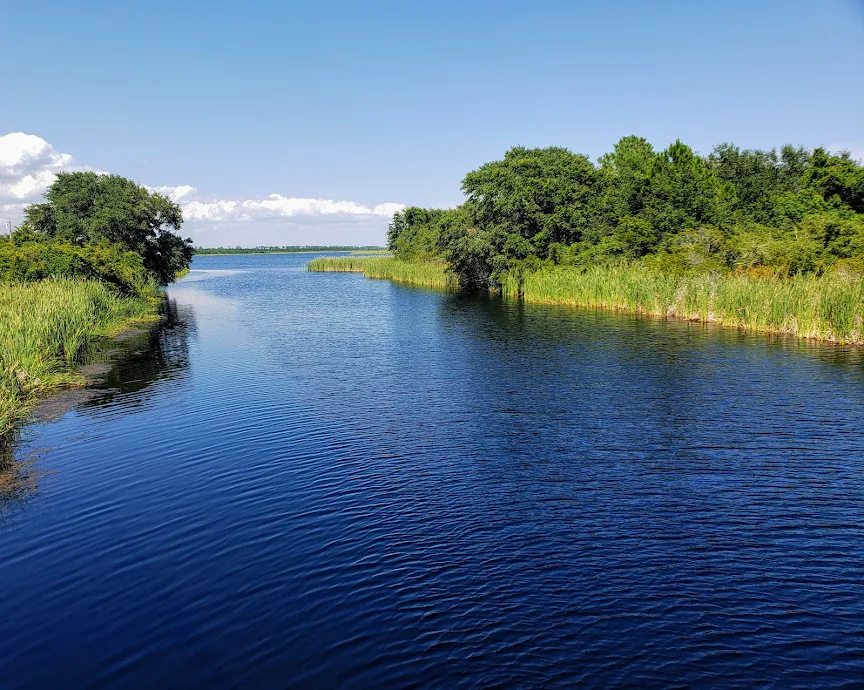
Today, the area with those wagon ruts that attracted Phillip's attention is known as the Gulf Oak Ridge Trail, and for many, it's kind of the heart of the trail system that's such a unique partnership between the cities of Orange Beach and Gulf Shores and Gulf State Park. With an elevation of around 40 feet above sea level in places, Phillip calls it "the spine of the island."
An observation deck in that area, which offers incredible views of the surrounding landscapes, is often a stop on the guided nature hikes led by Kelly Reetz, assistant superintendent of Gulf State Park. She can easily identify the many species of plants and animals that call the area home and share it with greatly increasing numbers of walkers, joggers, and cyclists. She calls attention to the various types of palms and palmettos found there, for instance, as well as a gorgeous orchid called Southern Twilight that typically blooms only around Valentine's Day. She also sheds more light on the indigenous people who once inhabited the territory.
"This area was very important to them because it had a lot of pignut hickory trees, and they were able to get oils from them, and they used that as their money. They traded with it, they cooked with it, and it was very important to their culture," Kelly says. "There is still a fair amount of the trees here, but in some areas the pine trees are kind of taking over."
Having been with the park for 26 years, Kelly has witnessed a gradual explosion of activity in a place that was once mostly secluded. "Nowadays people know it's here because of the internet, but it used to truly be a hidden gem," she says. "You would walk on the trail and not see very many people, but now so many people either come here for the beach or for the trail."
Brad Johnson, trail coordinator for Orange Beach's Coastal Resources Department, notes that the surge in popularity was exponential during the COVID pandemic, with great numbers of people wanting to distance themselves outdoors. As word has continued to spread, either by mouth or online, participation has kept growing tremendously. He also points out that the fact that there's no admission fee certainly plays in their favor. "There aren't many things that you can do down here that are free, and this is one of them," says Brad. "You can bring the kids and the bikes and stay out here all day and not spend a penny."
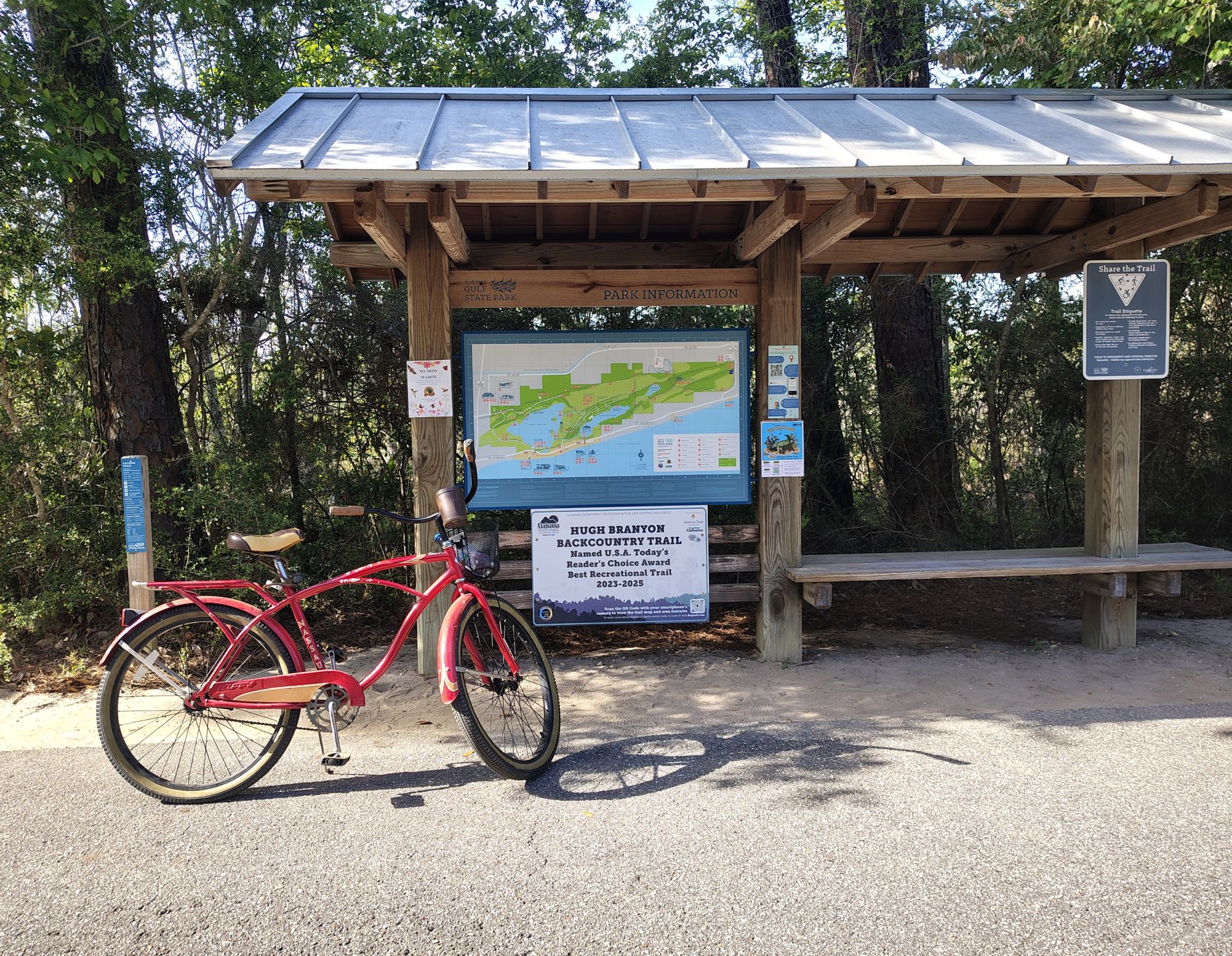
The park has a bike-sharing program that allows guests to use conventional bicycles free of charge, but another factor in the dramatically increased visitation is the proliferation of electric bikes. Numerous businesses in the area rent e-bikes, chiefly because of the trail. Sometimes that makes for crowded conditions, and unfortunately, not all of the visitors take the time to make themselves fully aware of the common rules of courtesy. These include staying to the right on the trail, observing posted speed limits, pulling off the trail when stopping, and making sure others on the trail are aware that they are approaching from behind.
"It's definitely a problem," Kelly acknowledges. "People don't announce themselves, and the e-bikes are pretty quiet, so they'll come right up on you and startle you, and some of them go way faster than they should be going. Sometimes the rangers will sit in strategic locations, and we have written tickets to them, but mostly it's awareness — making people aware that these trails are for everybody."
On the positive side of things, the advent of e-bikes has motivated many more people to enjoy the park who wouldn't otherwise, maybe because of physical limitations.
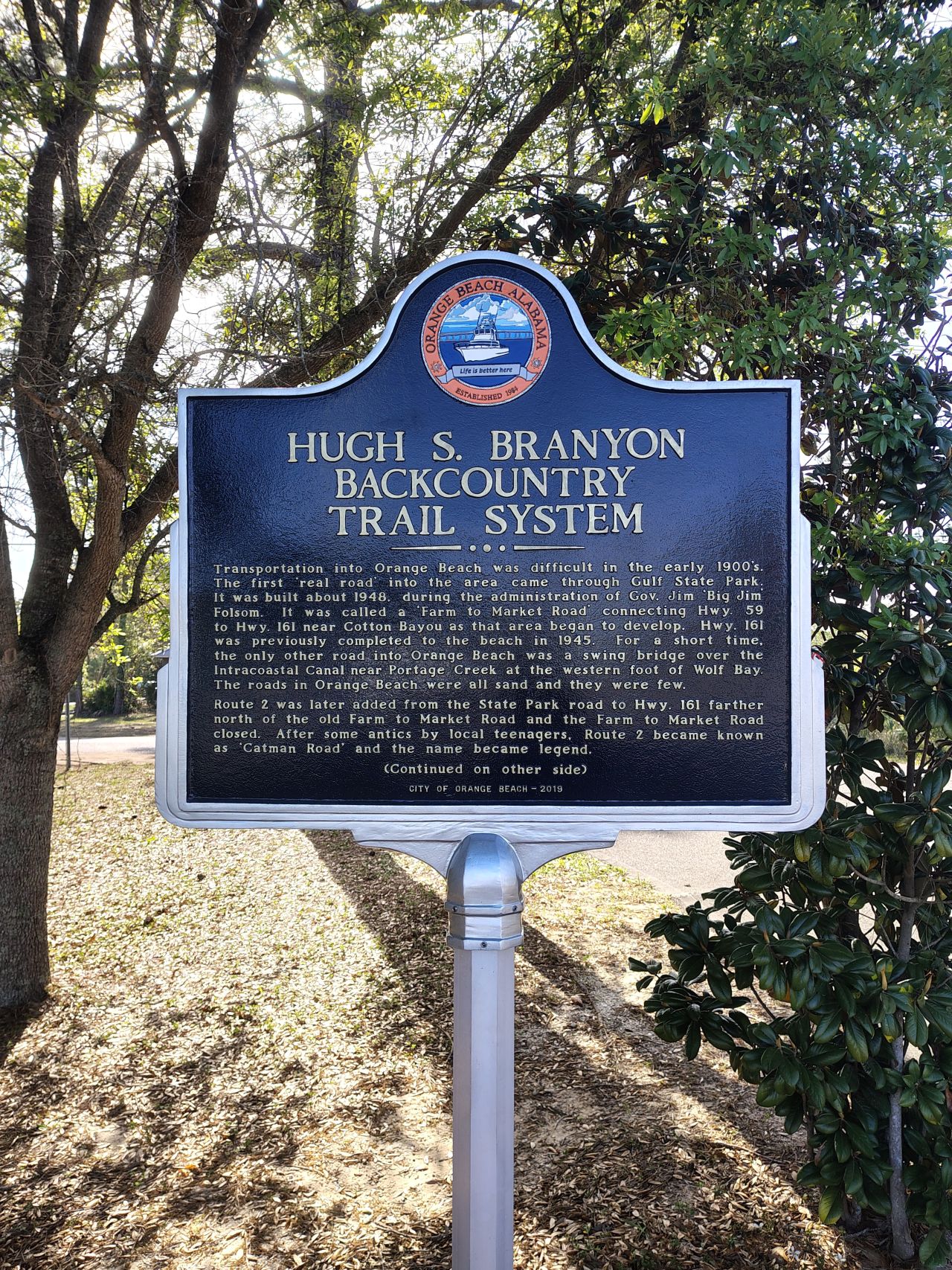
Phillip, who first had the vision of what the backcountry trail could be, sometimes marvels at what it has become. "It has a life of its own," he says, "and it's shaped lots of lives." He wishes its namesake were alive to see how much it's grown — both in distance and in popularity — but Branyon passed away 10 years ago, just a few days shy of his 77th birthday. He was proud of what the backcountry trail had already become in his lifetime, Phillip says, and may have sensed that it would have an even bigger future. "I think Mr. Branyon definitely saw the potential. He was around long enough to see that tourism was becoming more nature-centric."
More from
Sports & Fitness
category


David Miller: Always a Bulldog!

The Rites of Spring