.jpg)


It’s the early 2000s, and the Back Door Poets are hosting a poetry reading at Van Gogh’s coffee shop. Seating is couches from thrift shops or donated. Folk art hangs on the walls. Punk rockers, nerds, geeks, hippies, vegans, and other cast-asides of society gather to share stories and camaraderie, and outside they share beers and cigarettes. Many of the patrons walked around the corner from a house known as the 309 Punkhouse.
A train goes whistling by, just steps from the coffee shop door. The folks outside holler in unison at the passing locomotive. Some new residents of the punkhouse may have just arrived from that same train just a little further down the tracks when it was about to cross the 17th Ave Graffiti Bridge at a spot known to train jumpers as Hobo Beach.
Pensacola is known more to the outside world for the Navy and white sand beaches than for its thriving transient, DIY counter-culture.
In 2026, that community still exists, though a bit more visible, more professional, more academic, and more complicated. Van Gogh’s is now End of the Line cafe, and the 309 Punkhouse is an archival center run by a board with Valerie George and Scott Satterwhite as co-executive directors.
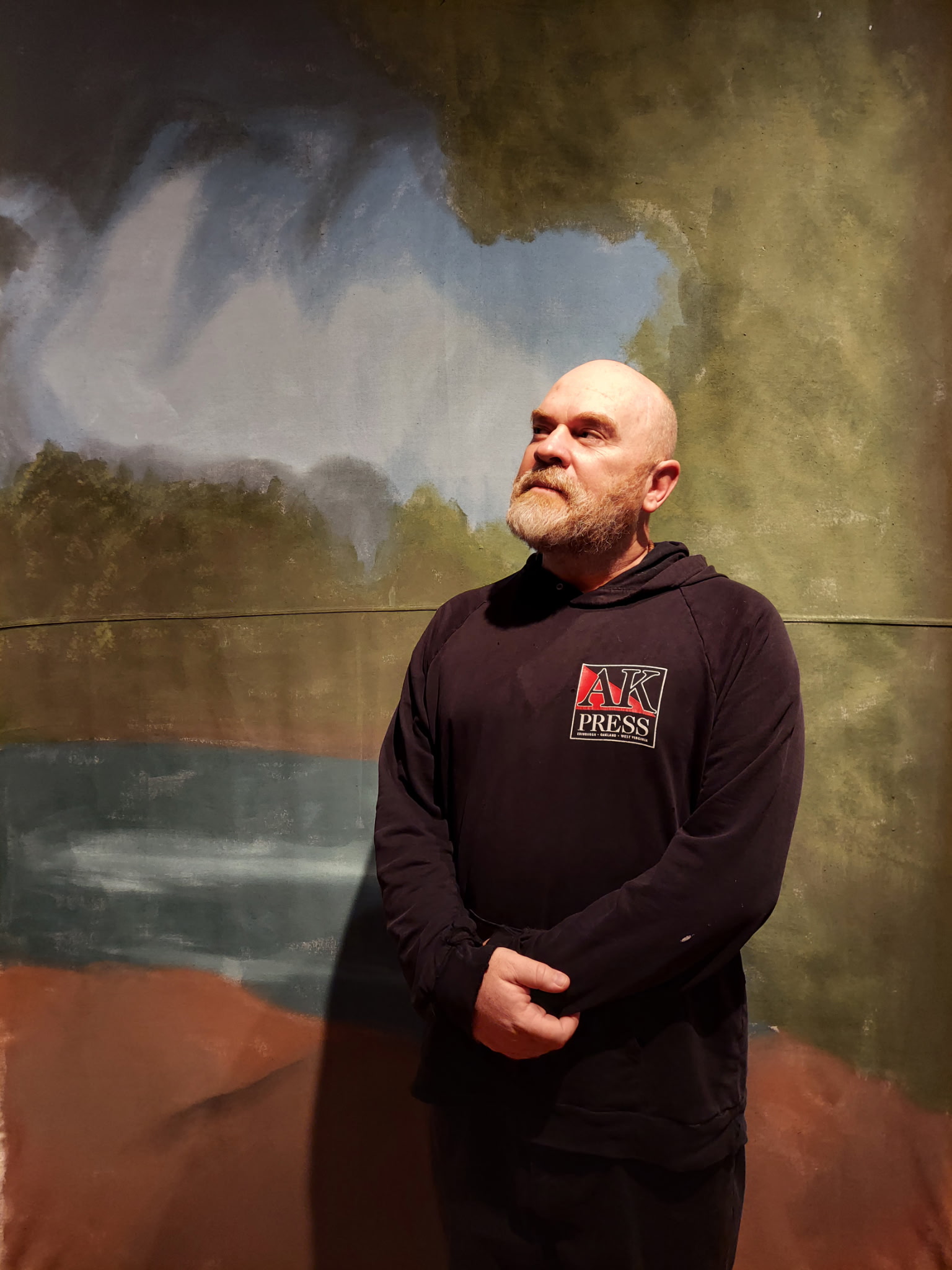
Besides being co-director of 309, Satterwhite wears many hats — father, husband, bookstore owner, professor, writer, archivist — and has gone by many names — Christopher, C. Scott, Scotty, Scotty Potty.
He said, most people with the name Scotty growing up have probably been Scotty Potty at one point or another in their life, thanks to the popularity of the Garbage Pail Kids in the 80s. But not many can claim they have a publication with that name, as Satterwhite can. Issue #5 of The CIA Makes Science Fiction Unexciting was written anonymously by Satterwhite, but when it was published, the editor added Scotty Potty as the author.
He was given that name when he was a resident at the 309 Punkhouse. Another resident, Skott Cowgill, was living there when Satterwhite’s mother called looking for her son. The person who answered the phone thought there was some mean joke happening because Skott Cowgill’s mother had died. The mother then clarified, and he said, oh, you mean Scotty Potty and the name stuck. But these days, Satterwhite simply introduces himself as Scott.
Satterwhite moved to Pensacola in 1995. He had been in the Navy for about five years at this point, and when he put in for his dream transfer, he listed San Francisco, Seattle, and San Diego. He was stationed in Pensacola instead.
Disappointed at first, Satterwhite found a community that changed his trajectory. While stationed in Maryland, his roommate came home with Nirvana’s “Nevermind” record. From the opening riff of “Smells Like Teen Spirit,” Satterwhite was hooked, as was most of America. The following year, he purchased Nirvana’s next album, and Kurt Cobain’s message in the liner notes started to change a bit of how Satterwhite saw the world.

Cobain’s words were a stark contrast to the hypermasculine world Satterwhite was immersed in, “If any of you in any way hate homosexuals, people of a different color, or women, please do us a favor — leave us the f— alone! Don’t come to our shows and don’t buy our records.”
That was punk rock and Satterwhite’s first introduction into the scene. Punk rock is difficult to define, typically focused on music, but to Satterwhite, it’s more about culture and ideals. Through Nirvana, Satterwhite began listening to other bands that Kurt Cobain mentioned in the liner notes, but even more importantly, Cobain's literary hero, William S. Burroughs.
When Satterwhite arrived in Pensacola, he walked by Subterranean Books and saw a poster of Burroughs in the window. The owner, Paul Williams, suggested a book, The Communist Manifesto, and Satterwhite bought it. He returned to the bookstore after having read it, and when questioned about it by the owner, Satterwhite responded that some of it made sense, but he didn’t like the part about not being able to inherit money. Paul’s response, and who do you think is going to leave you money?
He also began attending punk rock shows at the once-famed Sluggo’s in downtown Pensacola, and slowly became more involved in the scene. At the Sound Box record store, he saw stacks of Zines (pronounced Zeen), DIY pamphlets that are central to the punk scene, for sale, and would see other attendees at Sluggo’s selling them.
Satterwhite thought that was something he could do and began writing his own anonymously. He also became a distributor for those published across the country. All the while, still in the Navy, and not letting his punk rock anti-establishment friends know, maintaining a dual identity of sorts.
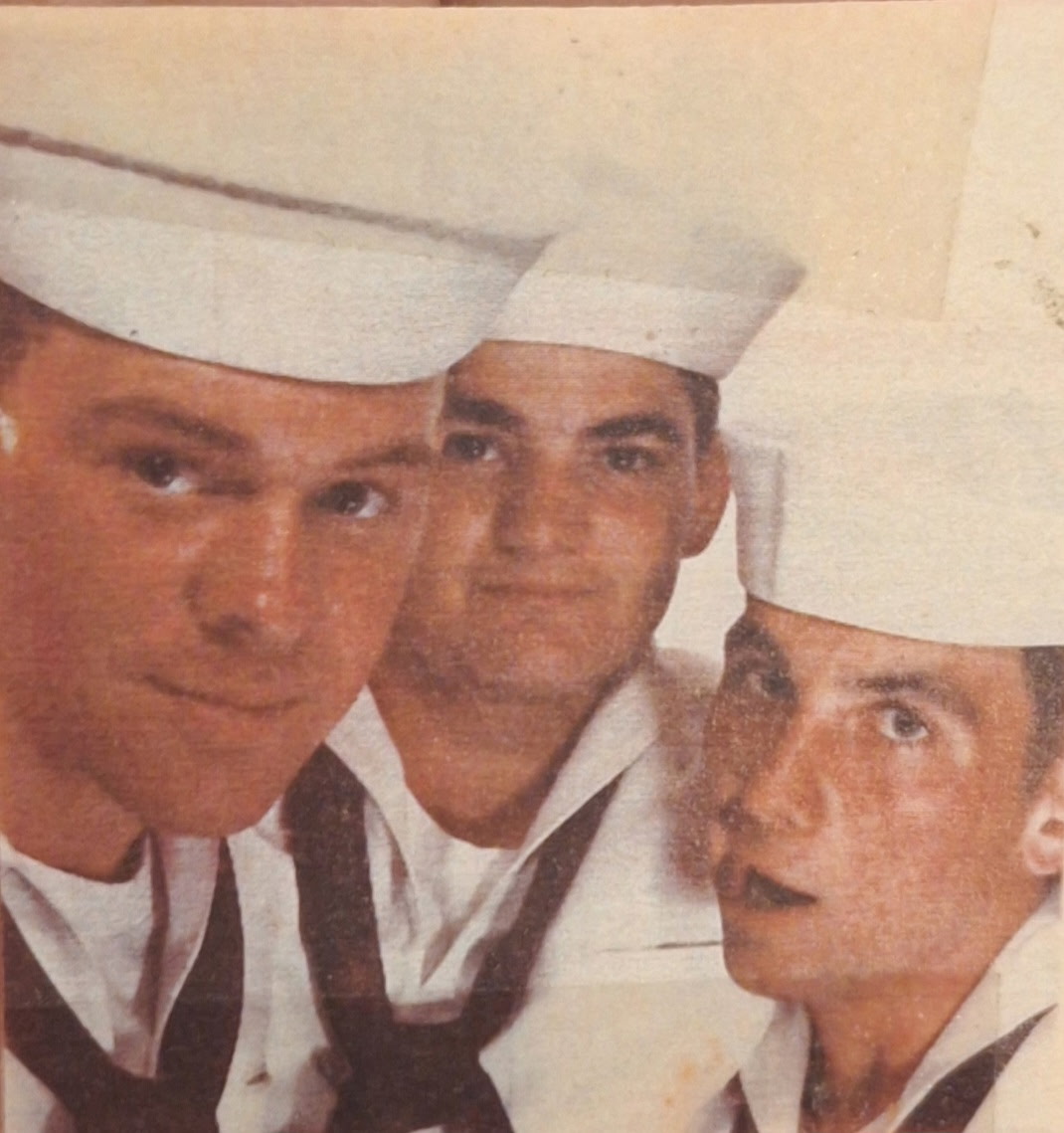
Honorably discharged from the Navy in 1999, Satterwhite was in need of housing, and two of his friends had a room available at 311 N 6th Ave. Next door to the already famous 309 house, the rent was $200 for the entire month. His share of the rent came to $66 a month. Downtown Pensacola then was run down, industrial, and smelled from the sewer treatment plant on Main Street, far from the tourist-filled Downtown of today.
They also started an infoshop at that time called CORE House (Collective of Resource Empowerment). One of the things offered at the infoshop was a library. The CORE House was short-lived, but the library remained.
Two members of the CORE House had moved to Asheville, NC, and were involved with a prison book project there. Overwhelmed with requests from Florida prisons, they suggested Pensacola open one with the library from CORE House. Satterwhite obliged. The first books requested were Louis L’Amour westerns from a death row inmate.
After moving to 309, Satterwhite packaged books from his bedroom before moving the project to Subterranean Books in 2003. When Subterranean Books closed in 2007, Satterwhite needed a space to continue the prison book project, and Open Books was born. Starting in West Pensacola, Open Books relocated to the current location on Guillemard Street in 2012.
Starting with a tattered collection of paperbacks and a couple of dozen books purchased from Subterranean Books, the inventory was sparse. A gift from Donald Yeo in the form of a $500 credit at AK Press helped Open Books become a sustainable operation. From those meager beginnings, Open Books delivered 14,000 books to prisoners in 2025.
When asked how he balances all these different ventures, Satterwhite is quick to point out that it would have all fallen apart very early on without the collective help of volunteers. With 309, Lauren Anzaldo plays a big part in the grant-writing process, and the board of directors is very active.
As for Open Books, Satterwhite says, “Johnny Ardis is really the main person behind the organization. If it weren't for him, we would not be nearly as successful as we are today. And that’s an understatement. And that goes for all the people who run our Prison Book Project as well. They are very hard-working and the salt of the earth.”
On April 4th and 5th, 2026, Open Books will have its quarterly $1 book sale. At the last $1 book sale, they sold over 10,000 books, a testament to providing inexpensive literature to the reading public.
What: $1 booksale
When: April 4th & 5th, 2026
Where: Open Books, 1040 N. Guillemard St., Pensacola, FL 32501
More from
Community Endeavors
category